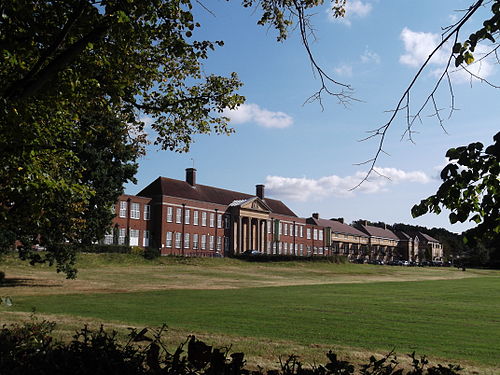
Oxford Brookes University
About Oxford Brookes University
-
Origins: It traces back to the Oxford School of Art (1865) and gained university status in 1992, adopting the name Oxford Brookes University.
-
Community: The university welcomes students from many countries (100+), indicating a diverse international student body.
-
Teaching focus: It emphasizes teaching quality, employability, and modern learning.
Why this matters for you as an international student:
Studying in a university that highlights international diversity, teaching quality and modern learning means you are likely to get support tailored for non-UK students (visa, language, transition), plus a more global outlook in your studies.
Why Choose Oxford Brookes University
Here are the key attractive reasons for international students:
-
Location: Oxford is a globally known educational city; being in Oxford gives you access to cultural, historic and student-city life benefits. From the international guide: “Where is Oxford in the UK?” is a featured question.
-
Teaching excellence: OBU is ranked high for teaching among modern universities. For example, the site mentions “Ranked in the top 10 in South East England” and “Ranked 5th in the UK for teaching” in a recent ranking.
-
International outlook: Welcomes students from 150+ countries; offers support for international students.
-
Flexible learning & modern modes: The university provides distance learning and blended options (see later). That gives more flexibility if you can’t immediately move to the UK.
-
Subject strengths: In subject-specific rankings (see next section) OBU has strong listings globally in certain fields (e.g., Hospitality & Leisure).
-
Support for international students: From arrival weekends, student services, to English language support, as highlighted in the international student pages.
University Ranking
Rankings are one (imperfect) indicator of reputation and quality. Here are key figures for OBU:
- OBU is ranked 374th out of 1,501 universities worldwide, a rise of 42 places from last year. Nationally the University is ranked 38th overall out of 90 institutions.
-
The Times Higher Education (THE) ranking page: OBU is placed within the 801-1000 band in the World University Rankings 2026.
-
UK-specific ranking: In the The Guardian University Guide 2025, OBU rose to 38th in the UK (up 13 places).
-
Subject-rankings: In the 2025 QS Quacquarelli Symonds World University Rankings by Subject, OBU had 23 subject areas recognised globally.
Interpretation for international students:
While OBU may not sit in the very top elite global tier, it is strong among modern UK universities, has improvement momentum, and offers very good subject-specific strengths and teaching quality. If you prioritise teaching, student support and a good student experience rather than only “top 10 global ranking”, OBU is a compelling choice.
Campus Locations
-
The main campus is Headington Campus, in Oxford (address: Headington Road, Oxford, OX3 0BP) according to their website.
-
According to one source OBU had other campuses such as Wheatley and Harcourt Hill; but note: It mentions that Harcourt Hill closed in 2024/25 with activities moving to Headington.
-
There is also a campus in Swindon for Adult Nursing studies.
Implications for students:
-
It’s good to verify exactly which campus your course will be at (especially if you come from abroad, you’ll want to know location, commute, accommodation).
-
Since the university seems to be consolidating campuses (e.g., closures, moves) it's wise to check latest campus for your subject.
-
Being in Oxford city means easy access to city amenities, transport, culture and a large student-community.
Types of Courses (Study Levels)
-
OBU offers a full range: from foundation and pre-university (pathways), undergraduate degrees (Bachelor’s) to postgraduate (Master’s, PhD).
-
For international students: English & pathways courses to prepare for undergraduate or postgraduate study.
-
Example: “We can offer you a range of levels of study, from bachelor’s and foundation degrees through to advanced study at master’s and PhD level.”
Mode of Learning (On-site / E-learning / Blended)
OBU explicitly offers distance-learning/online study options:
- Our distance learning options give you the flexibility to study for a Brookes degree level qualification from your home country. Some courses are only available through distance learning. Others include both distance learning and on-campus options.”
-
The “Modes of study” page details how students can study full-time, part-time, sandwich (placement/year abroad) or distance learning.
-
There is also mention of “Digitally Enabled Teaching Toolkit” which underpins blended and online teaching.
For you as an international student this means:
-
You may choose or be eligible for remote / online programmes which is helpful if you cannot immediately relocate to the UK.
-
If you study on-campus you will have full-time, face-to-face experience, but there is flexibility (e.g., part-time, distance) depending on your course.
-
Make sure to clarify whether your specific programme is on-campus, blended, or fully online since not all courses may offer all modes.
Number of Programmes Offered
-
While an exact total number is not clearly advertised in one place, external sources list “264 courses” at OBU across undergraduate and postgraduate levels.
-
The “Distance Learning” listing shows 16 online/distance courses.
-
The broad range of levels (foundation, bachelor’s, master’s, PhD) and modes suggests a wide selection.
What you should check:
-
For your subject of interest, check how many options are there (specialisations, pathways, part-time vs full-time) on the university’s official course catalogue.
-
Ensure international intake options, language requirements, start dates (Sept, Jan) are available.
Highlights
Here are some standout features:
-
Strong subject-ranking: For example, Hospitality & Leisure Management is ranked 21st globally and 2nd in the UK.
-
Teaching reputation: OBU emphasises teaching excellence and has national recognition for teaching quality.
-
Flexible study modes: On-campus, part-time, distance learning and blended options.
-
International student community: Students from 150+ countries; tailored support for international students.
-
Location benefit: Being in Oxford – a globally known university city – means access to cultural/academic resources.
-
Scholarship support: Dedicated international scholarships as outlined above.
-
Close business & industry links: The website emphasises “strong links with business and industry” as part of the value proposition for students.
Scholarship
-
International Student Scholarship — September entry
-
Typical award: £2,000 (for new, full-time, international fee-paying students at undergraduate and 1–2 year postgraduate levels for September start). Eligibility limited to students starting in the specified September entry year.
-
-
International Student Scholarship — January entry
-
Similar scheme for students starting in January (check the page for precise eligibility and the year it applies to).
-
-
International Student Scholarship — CAS Ready
-
A £3,000 scholarship was offered (example for encouraging early CAS readiness). Eligibility included being “CAS Ready” on CAS Shield by a specified date or meeting offer conditions and deposit deadlines. These promotions can be time-limited — check the page for the current year’s deadline.
-
-
GREAT Scholarships (external, UK-wide programme)
-
Oxford Brookes participates in the GREAT Scholarships programme (for example, scholarships worth £10,000 for certain countries such as Kenya, Nigeria, Pakistan for taught master’s programmes in 2024–25). These have country-specific eligibility and limited numbers; application routes differ (often via the university’s postgraduate application).
-
-
Programme-specific and partner scholarships
-
Brookes lists programme/partner awards (e.g., IOP Publishing Scholarship, university departmental scholarships). Award values vary (example: IOP Publishing Scholarship listed at £5,000 for eligible postgraduate students — note application windows may close).
-
-
External / international partner deals
-
Brookes sometimes has partner or institution-specific scholarships (for example, targeted offers for graduates of partner universities or regional agreements). These are announced separately and often have bespoke eligibility criteria.
-
Who is eligible (general rules)
-
You must be a new, full-time, international fee-paying student for the relevant start date (undergraduate or specified postgraduate programmes), unless the award explicitly includes home students. Always confirm the award page for that intake.
-
Some scholarships are entry-date specific (September vs January) or time-limited (e.g., CAS Ready by a specific date).
-
External scholarships (like GREAT) require applicants to be from eligible countries and to meet the scholarship’s own rules (e.g., course type: taught master’s).
-
Programme-level awards may require a specific offer by a deadline, particular grades, or specific prior institutions/partnerships.
Where the money shows up — how awards are applied
-
Most tuition scholarships are credited against tuition fees (amount deducted from your tuition invoice). Some awards can be cash payments for living costs — check each award’s terms and conditions. Always read the terms (award type: tuition reduction vs. cash)
Important tips & practical advice
-
Start with the Funding Finder — it’s tailored to show funding you’re eligible for.
-
Keep evidence ready (passport, offer letter, transcripts, proof of CAS readiness, deposit receipt) — many scholarships require proof by a deadline.
-
Apply early — some scholarships are limited in number and awarded on a first-come basis or by a shortlisting process. If an award requires being “CAS Ready,” aim to complete the steps early.
-
Check external scholarships (GREAT, country scholarships, government schemes) — these can substantially lower costs but often have their own application windows.
-
If you’re a postgraduate applicant, search for departmental studentships or research council funding if you’re doing research degrees — these often appear on department pages.
Programs
-
GBP 17,100
-
GBP 17,100
-
GBP 18,950
-
GBP 18,950
-
GBP 16,750
-
GBP 17,750
-
GBP 16,750
-
GBP 18,350
-
GBP 18,350
-
GBP 17,750
-
GBP 17,950
-
GBP 16,750
-
GBP 17,750
-
GBP 18,950
-
GBP 17,750
-
GBP 17,750
-
GBP 17,750
-
GBP 17,750
-
GBP 17,750
-
GBP 16,750
-
GBP 16,750
-
GBP 18,950
-
GBP 17,100
-
GBP 17,100
-
GBP 17,100
-
GBP 9,900
-
GBP 17,100
-
GBP 16,750
-
GBP 17,100
-
GBP 17,100
-
GBP 17,100
-
GBP 15,000
-
GBP 16,750
-
GBP 17,750
-
GBP 18,950
-
GBP 17,750
-
GBP 17,750
-
GBP 18,950
-
GBP 17,750
-
GBP 17,950
-
GBP 16,750
-
GBP 18,350
-
GBP 17,750
-
GBP 16,750
-
GBP 16,750
-
GBP 16,750
-
GBP 16,750
-
GBP 16,750
-
GBP 16,750
-
GBP 18,350
-
GBP 18,350
-
GBP 17,950
-
GBP 18,950
-
GBP 17,100
-
GBP 17,950
-
GBP 16,750
-
GBP 8,000
-
GBP 16,750
-
GBP 16,750
-
GBP 9,900
-
GBP 9,900
-
GBP 17,100
-
GBP 16,750
-
GBP 1,860
-
GBP 16,750
-
GBP 1,030
-
GBP 16,750
-
GBP 16,750
-
GBP 1,860
-
GBP 1,860
-
GBP 16,750
-
GBP 18,500
-
GBP 17,750
-
GBP 17,750
-
GBP 16,750
-
GBP 17,750
-
GBP 16,750
-
GBP 17,750
-
GBP 17,100
-
GBP 16,750
-
GBP 18,950
-
GBP 16,750
-
GBP 18,350
-
GBP 16,750
-
GBP 17,100
-
GBP 16,750
-
GBP 16,750
-
GBP 9,900
-
GBP 16,750
-
GBP 16,750
-
GBP 18,350
-
GBP 18,350
-
GBP 11,250
-
GBP 16,750
-
GBP 17,950
-
GBP 16,750
-
GBP 17,750
-
GBP 16,750
-
GBP 16,750
-
GBP 16,750
-
GBP 18,350
-
GBP 17,750
-
GBP 17,750
-
GBP 17,950
-
GBP 17,100
-
AUD 18,350
-
GBP 15,500
-
GBP 16,000
-
GBP 18,950
-
GBP 16,750
-
GBP 17,750
-
GBP 16,750
-
GBP 17,750
-
GBP 16,750
-
GBP 17,950
-
GBP 16,750
-
GBP 16,750
-
GBP 10,800
-
GBP 16,750
-
GBP 16,750
-
GBP 16,750
-
GBP 16,900
-
GBP 5,750
-
GBP 17,750
-
GBP 18,950
-
GBP 18,950
-
GBP 17,750
-
GBP 18,950
-
GBP 17,100
-
GBP 17,100
-
GBP 17,750
-
GBP 18,950
-
GBP 17,750
-
GBP 16,750
-
GBP 19,450
-
GBP 17,750
-
GBP 17,750
-
GBP 17,750
-
GBP 16,750
-
GBP 17,750
-
GBP 20,800
-
GBP 17,750
-
GBP 9,900
-
GBP 16,900
-
GBP 17,750
-
GBP 16,900
-
GBP 16,900
-
GBP 17,750
-
GBP 17,750
-
GBP 18,950
-
GBP 18,950
-
GBP 14,800
-
GBP 17,750
-
GBP 17,100
-
GBP 16,750
-
GBP 16,750
-
GBP 16,750
-
GBP 18,950
-
GBP 18,950
-
GBP 16,750
-
GBP 16,750
-
GBP 4,750
-
GBP 17,750
-
GBP 17,450
-
GBP 18,200
-
GBP 16,750
-
GBP 16,750
-
GBP 17,750
-
GBP 17,750
-
GBP 8,800
-
GBP 17,950
-
GBP 19,450
-
GBP 19,450
-
GBP 16,750
-
GBP 10,800
-
GBP 5,650
-
GBP 16,750
-
GBP 17,750
-
GBP 16,750
-
GBP 17,950
-
GBP 17,750
-
GBP 17,750
-
GBP 14,650
-
GBP 17,950
-
GBP 16,750