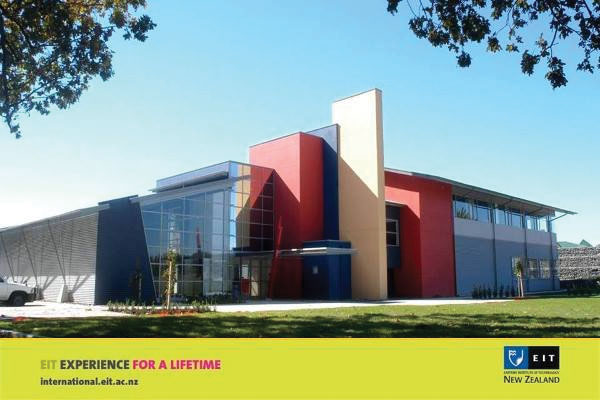
Eastern Institute of Technology (EIT)
The Eastern Institute of Technology, commonly known as EIT, is a public tertiary education provider in New Zealand and part of Te Pkenga – New Zealand Institute of Skills and Technology.
EIT provides career-focused education and applied learning designed to prepare students for employment in industries such as agriculture, business, health sciences, IT, hospitality, and engineering.
The institute is known for its small class sizes, practical training, and strong links with industry partners, allowing students to gain real-world experience during their studies.
EIT serves as the main tertiary provider for Hawke’s Bay and the East Coast region of New Zealand.
University Ranking & Recognition
EIT is a government-funded Institute of Technology and Polytechnic (ITP) rather than a traditional research university. Because of this, it is not typically ranked in global rankings such as QS or Times Higher Education.
However, it has strong recognition for:
-
Industry-focused vocational and applied education
-
High graduate employability
-
Partnerships with local industries and employers
-
Membership in Te Pkenga, New Zealand’s national vocational education network.
Types of Courses (Study Levels)
EIT offers a wide range of qualifications across different levels of study.
Certificate Programs
-
Entry-level vocational programs
-
Focus on practical training and industry skills.
Diploma Programs
-
Specialized training in fields like business, IT, agriculture, and health.
Bachelor’s Degrees
Professional undergraduate degrees including:
-
Bachelor of Computing Systems
-
Bachelor of Business Studies
-
Bachelor of Nursing
-
Bachelor of Viticulture and Wine Science.
Postgraduate Programs
Advanced programs such as:
-
Postgraduate Diplomas
-
Master’s degrees in selected fields.
Academic Fields Offered
Students can study programs in areas such as:
-
Agriculture & Primary Industries
-
Animal Management & Veterinary Nursing
-
Business & Computing
-
Arts, Design & Fashion
-
Hospitality, Tourism & Travel
-
Education & Social Sciences
-
Health & Sport Science
-
Viticulture & Wine Science
-
Science & Environmental Studies.
Mode of Learning
EIT offers flexible learning modes for students.
1. On-Campus Learning
Most programs involve face-to-face teaching with practical training facilities.
2. Online / Distance Learning
Selected programs offer online or digital learning options.
3. Blended Learning
Some courses combine:
-
Classroom lectures
-
Online learning modules
-
Industry placements or internships.
Key Highlights of EIT
- Part of Te Pkenga – New Zealand’s national vocational education network
- 150+ industry-focused programs
- Strong industry partnerships and practical training
- Small class sizes and supportive learning environment
- Campuses in Hawke’s Bay, Gisborne, and Auckland
- International student support services
- Study pathways from certificate to postgraduate level.
Facilities for Students
EIT provides a range of modern facilities to support student learning.
These include:
-
Industry-standard laboratories
-
Nursing simulation centres
-
Viticulture and wine training vineyards
-
Hospitality training kitchens
-
IT and computing labs
-
Student accommodation and support services.
Latest Updates (2025–2026)
Integration into Te Pkenga
EIT is now officially part of Te Pkenga – New Zealand Institute of Skills and Technology, which combines multiple vocational institutions into a unified national education network.
Expanded International Programs
The Auckland campus continues to expand business and IT programs for international students.
New Scholarships and Funding
Additional scholarships and funding opportunities have been introduced to support both domestic and international students pursuing applied education programs.
Career Opportunities After Studying at EIT
Graduates from EIT often find employment in industries such as:
-
IT and software development
-
Business management
-
Healthcare and nursing
-
Agriculture and viticulture
-
Hospitality and tourism
-
Education and social services.
Scholarship
English Language Requirements
To ensure academic readiness, EIT requires international students to demonstrate English proficiency. For certificate level programmes, a minimum IELTS of 5.0 is required, while diploma and bachelor’s programmes typically require IELTS 5.5–6.0. For postgraduate programmes, the requirement is generally IELTS 6.5. Equivalent TOEFL and PTE scores are also accepted, and some programmes with specialized content may require higher scores.
Scholarships for International Students
EIT offers several scholarships to support international students, often based on academic merit, leadership potential, or financial need. These scholarships are designed to help reduce tuition fees and make studying in New Zealand more affordable.
Key scholarships for 2025–26 include:
-
EIT Academic Excellence Scholarship – Provides up to NZD 5,000 toward tuition fees. This is awarded to students with excellent academic records who demonstrate leadership or community involvement.
-
EIT Youth Scholarship – Designed for students aged 16–19 years studying full-time at Levels 1–3. It rewards early academic achievement and encourages leadership development.
-
EIT International Science & Engineering Merit (ISEM) Scholarship – Offers a 35% tuition fee reduction for students studying STEM fields, applicable for up to 5 units per term.
-
Education Future International Scholarship – Offers up to NZD 18,000 (~INR 10 lakhs) for international students to study at EIT or globally. Eligibility criteria vary depending on nationality.
-
Education New Zealand Excellence Awards – Provides up to NZD 20,000 for international students, including Indian nationals, at undergraduate or postgraduate levels.
-
Industry & Trust Scholarships – Various scholarships are offered by industry partners and trusts for specific fields such as ICT, engineering, social services, and business.
-
External Awards and Fellowships – Additional opportunities may include university-wide or field-specific grants, depending on availability and eligibility.
Eligibility for Scholarships
Most EIT scholarships require students to meet the following criteria:
-
Academic merit: Minimum GPA requirements (around 6/10 for bachelor’s, 3.0+ for postgraduates).
-
English proficiency: IELTS 6.0+ for bachelor’s, 6.5+ for postgraduates (or equivalent TOEFL/PTE scores).
-
Full-time enrolment: Scholarships are generally not available to part-time students.
-
Age restrictions: Some scholarships, like the Youth Scholarship, are limited to certain age ranges.
-
Supporting documents: These may include motivation letters, academic transcripts, references, and evidence of leadership or community involvement.
Fees and Living Costs
Tuition fees vary depending on programme level:
-
Certificate/Diploma: Around NZD 18,000–22,000 per year.
-
Bachelor’s degree: Around NZD 20,000–24,000 per year.
-
Master’s degree: Between NZD 22,600–38,000 per year.
Living costs in New Zealand for international students are estimated at NZD 15,000–25,000 per year, depending on accommodation and lifestyle. Immigration New Zealand also requires proof of funds, including approximately NZD 15,000 plus a return ticket per year of study.
Why Choose EIT?
EIT stands out because of its hands-on learning, research quality, and strong industry links. International students benefit from career-focused programmes, post-study work opportunities (up to 3 years), and comprehensive support services to help them succeed academically and socially in New?Zealand.