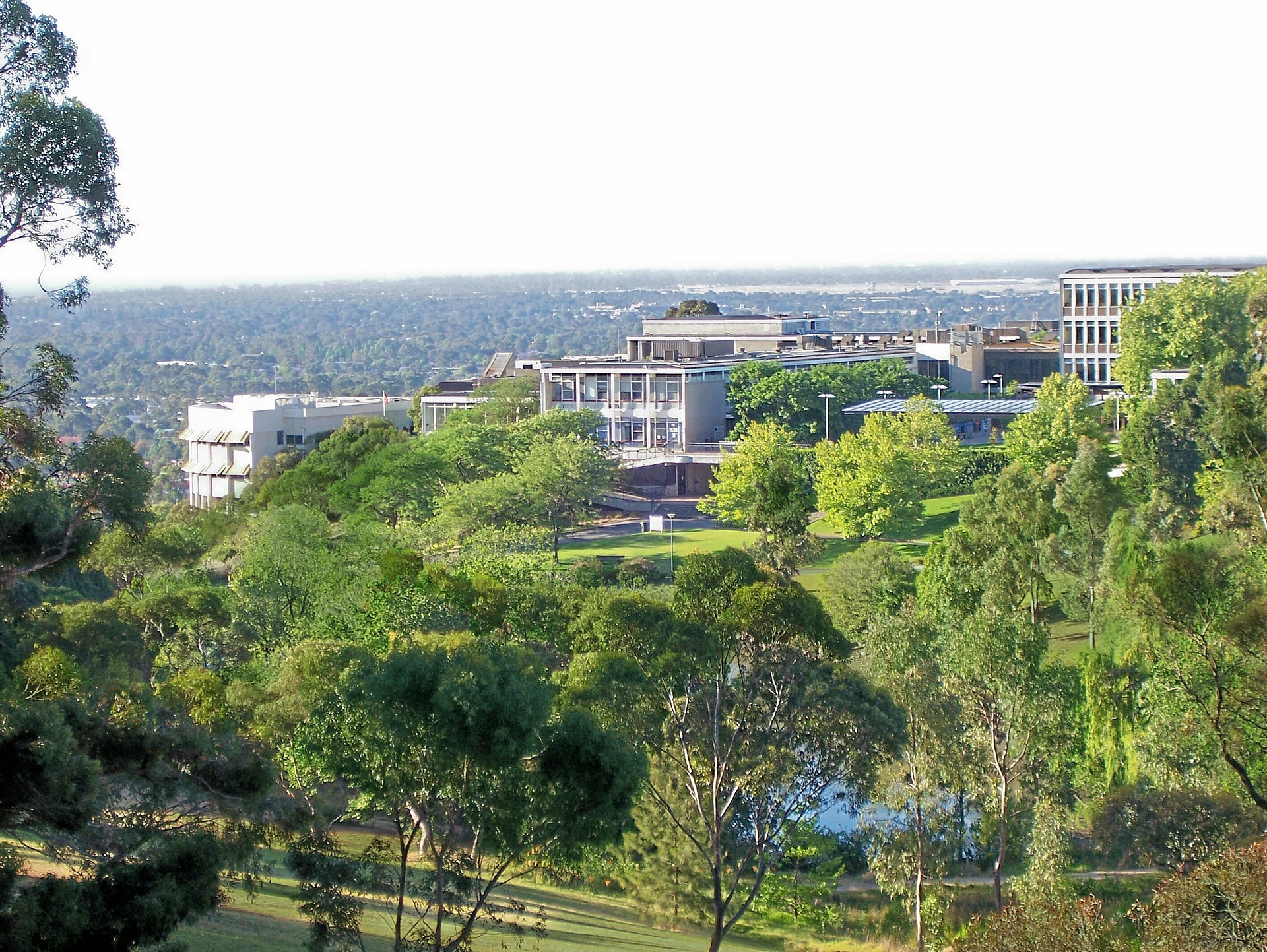
Flinders University
Flinders University, established in 1966 in Adelaide, South Australia, is one of Australia’s most vibrant research institutions. Named after the explorer Matthew Flinders, the university combines a rich heritage with a modern, forward-looking focus on innovation, sustainability, and industry collaboration. Known for its strong connection to community and industry, Flinders fosters a learning environment that nurtures critical thinking, creativity, and real-world problem solving. The university serves over 46,000 students — including thousands of international students from more than 90 countries — and is respected internationally for its contributions to research, teaching, and social impact.
Why International Students Choose Flinders University
Choosing Flinders means choosing a university that blends quality education with a supportive, global, and student-centered environment. Key reasons to consider Flinders include its industry-focused curriculum, strong employment outcomes, and a welcoming, inclusive culture. Flinders ranks number one in South Australia for teaching quality and undergraduate starting salary, partly thanks to its strong links with global companies such as CISCO and BAE Systems. Students benefit from a hands-on education — including internships, industry projects, and research opportunities — that align them with career needs from day one. The university’s commitment to sustainability, inclusivity, and innovation further enhances its global reputation, providing a unique, future-oriented education.
Rankings and Global Recognition
Flinders has been steadily climbing international rankings, reflecting its growing impact and academic strength. According to the latest indicators:
-
Ranked among the top 2% of universities worldwide.
-
Appeared in the Top 350 globally in Times Higher Education World University Rankings 2026.
-
Achieved a significant climb in the QS World University Rankings 2025, rising 44 places from 380th to 336th globally.
-
Featured in the Academic Ranking of World Universities (ARWU) 2025 at #368, up 42 places.
-
Positioned in the top 25 worldwide and #1 in Australia for sustainability and equality initiatives, demonstrated by top-11 rankings in six UN SDGs, including SDG5 (Gender Equality) and SDG10 (Reduced Inequalities).
Campus Locations & Learning Environment
Flinders operates multiple campuses across South Australia and beyond:
-
Bedford Park Campus – The university’s main and most advanced campus, featuring modern infrastructure, research facilities, student hubs, landscaped greenery, and convenient access to the city centre.
-
City Campus – Located in Adelaide’s Festival Plaza, offering a vibrant urban setting ideal for networking and internships.
-
Northern Territory and Global Sites – Delivering specialised courses and research opportunities in regional Australia and international partnerships.
The campuses are equipped with advanced laboratories, libraries, innovation hubs, and sustainability-focused initiatives, and a strong emphasis on collaborative, student-focused learning spaces.
Courses Offered & Study Levels
Flinders offers over 120+ programs across multiple fields, ranging from traditional academic disciplines to emerging industries.
-
Undergraduate Programs – Typically 3 to 4 years, covering health sciences, engineering, law, business, social sciences, creative arts and more, all with industry placements.
-
Postgraduate Coursework – Includes specialized master’s degrees tailored for career advancement, often integrating real-world experience.
-
Higher Degrees by Research (HDR) – Master’s by Research and PhD programs available in areas such as biomedical sciences, engineering, and humanities.
-
Pathway Courses – Designed to help students transition into university study, including diploma and foundation programs.
Modes of Learning
Flinders structures its programs to accommodate diverse learning preferences:
-
On-Campus (Face-to-Face) – Traditional classroom learning in Adelaide, allowing students to engage directly with peers and faculty.
-
Blended Learning – Combines in-person and online elements, offering flexibility without sacrificing interaction.
-
Online/Remote Learning – Complete online courses for international students or those working professionally, often with live sessions and interactive content.
Student Services and Support
Flinders offers full-scale support services designed especially for international students. Their dedicated International Student Services team helps with orientation, accommodation, arrival services, visa advice, and social activities. From welcome programs and mentorship to counselling and career support, students have access to comprehensive resources for academic success and cultural adjustment. Orientation is a multi-step process that includes academic introduction, campus tours, and social events.
Highlights of Studying at Flinders
Studying at Flinders is more than just obtaining a degree — it’s an immersive experience defined by industry integration, global perspectives, and innovative research. Students benefit from cutting-edge research centres, strong employer partnerships, high graduate employment rates, and opportunities to work on real-world projects while studying. Adelaide’s comparatively lower cost of living and safe lifestyle make it an attractive base for international students. The university’s leadership in sustainability and equality provides an inspiring environment to grow both personally and professionally.
Final Thoughts
For international students seeking high-quality education in a safe, inclusive, and future-focused environment, Flinders University offers an extraordinary opportunity. With strong global rankings, diverse programs, flexible learning modes, world-class research, and a welcoming community — all situated in the lively city of Adelaide — Flinders provides a transformative academic experience. Whether your goal is to enhance your career, engage in groundbreaking research, or explore life in one of Australia’s most liveable cities, Flinders is a place where ambition meets opportunity.
Scholarship
At a glance — the main international scholarships you should know
-
Vice-Chancellor International Scholarship (Go Beyond) — 50% tuition reduction for high-achieving international students (undergrad and coursework postgrad). Competitive; shortlisted applicants may be asked for a video submission. Eligibility: typically ATAR ≈95+ (or international equivalent) for undergrads, ~6.5 GPA+ for postgrads; open to new, full-fee paying international students.
-
Kickstart Scholarship — 20% tuition for eligible new international students for certain intakes (e.g., Semester 2, 2025 and subsequent intakes listed on the page). Check current intake availability and eligible programs on the Kickstart page.
-
Flinders International Research Scholarship (FIPRS) — for Higher Degree by Research (HDR) students; covers international tuition fees + stipend (living allowance). Limited number offered each year — highly competitive. (Flinders publishes HDR/international fact sheets with stipend rates and inclusions.)
-
Australian Government RTP scholarships + Flinders HDR scholarships — international HDR applicants may also be eligible for Commonwealth (RTP/AGRTP) scholarships where applicable; Flinders’ HDR fact sheet summarizes what each award covers (tuition, living allowance, relocation allowance, OSHC for some).
-
High School / International High School Scholarships — awards that recognise high-performing international students coming from an Australian high-school curriculum (or recognized equivalent); details available on Flinders’ high-school scholarship page.
-
Faculty, donor and region-specific scholarships — Flinders publishes many additional awards (faculty scholarships, donor funds, region-targeted scholarships and small travel/short-term grants). Use the Flinders scholarship search and the Scholarships pages to filter by eligibility.
Who is typically eligible (common patterns)
-
International (full-fee paying) student status: most international scholarships exclude Australian citizens, NZ citizens and Australian permanent residents — they are for overseas fee-paying students.
-
Commencing students: many scholarships are for new students only (i.e., you’re applying to start at Flinders), though some HDR awards and a small number of donor awards may also be open to continuing students.
-
Mode of study: most awards require on-campus, full-time enrolment at an eligible Flinders course (check each award’s Conditions/Terms).
-
Academic merit: most major awards (Vice-Chancellor, High School scholarships) are merit-based and use your most recent qualification (e.g., Year 12, bachelor GPA) as the selection metric. Specific minimums are published per award.
-
Research awards: HDR scholarships (FIPRS / AG-RTP) require an offer into an eligible research program and are very competitive — selection is based on research potential, prior academic performance, referee reports and supervisor support.
What scholarships cover (typical inclusions)
-
Tuition fee reduction or full tuition waiver (e.g., 50% Vice-Chancellor scholarship; HDR scholarships cover tuition).
-
Living allowance (stipend) for HDR recipients — Flinders’ 2025 HDR fact sheet lists the living allowance (e.g., the 2025 rate shown is around $35,010 pa for some scholarships) and relocation support. Confirm the current year’s stipend in the HDR fact sheet.
-
Overseas Student Health Cover (OSHC) and relocation assistance — included for certain HDR scholarships (check the Conditions of Award for each scholarship).
Documents you’ll usually need (prepare these early)
-
Certified copies of transcripts (secondary + tertiary where applicable) and English translations if not in English.
-
Proof of identity and passport (citizenship).
-
Evidence of prior study (e.g., ATAR, IB results, bachelor transcript and GPA).
-
CV / resume and reference contacts (for research scholarships).
-
Personal statement / scholarship essay responses and any required video submission (Vice-Chancellor shortlist).
-
Offer letter or application ID for the Flinders program you are applying to (if already applied).
Important fine print & behaviour rules (read the Conditions!)
-
Limited places: flagship scholarships are limited in number and highly competitive (e.g., FIPRS has few awards; Vice-Chancellor is competitive). Apply early and prepare a strong application.
-
Performance & enrolment conditions: recipients often must maintain satisfactory academic progress and full-time enrolment; failure may lead to suspension or termination of the scholarship.
-
No double-dipping: many scholarship rules prevent stacking awards such that the combined benefit exceeds tuition or what’s permitted — check the Conditions for rules about holding multiple scholarships.
Deadlines & timing (how to track)
-
Flinders publishes individual opening/closing dates per scholarship. Some awards (e.g., Kickstart) list specific intakes (Semester 2 2025, Semester 1 2026 etc.); others may be rolling or annual. Always check the live scholarship page or the scholarship search tool for current dates.
Top tips to improve your chances
-
Apply early for your Flinders course — many awards auto-assess early applicants.
-
Show strong academic evidence (high grades, class rank, IB/ATAR equivalents). Merit is the primary filter for major awards.
-
For Vice-Chancellor / competitive scholarships: prepare an excellent personal statement and practice the potential video submission — highlight leadership, impact, and how you will contribute to Flinders and your field.
-
For HDR applicants: contact potential supervisors early; a supportive supervisor and strong research proposal improve selection chances.
Programs
-
AUD 41,200
-
AUD 41,200
-
AUD 41,300
-
AUD 21,900
-
AUD
-
AUD 55,500
-
AUD 39,000
-
AUD 39,000
-
AUD 35,500
-
AUD 35,500
-
AUD 41,400
-
AUD 39,000
-
AUD 39,000
-
AUD 39,000
-
AUD 41,400
-
AUD 41,500
-
AUD 33,800
-
AUD 33,800
-
AUD 36,300
-
AUD 36,300
-
AUD 33,900
-
AUD 45,000
-
AUD 35,700
-
AUD 35,700
-
AUD 45,000
-
AUD 46,700
-
AUD 35,500
-
AUD 46,700
-
AUD 41,500
-
AUD 35,500
-
AUD 42,200
-
AUD 41,500
-
AUD 35,500
-
AUD 43,500
-
AUD 43,500
-
AUD 41,400
-
AUD 44,300
-
AUD 44,300
-
AUD 44,300
-
AUD 46,000
-
AUD 42,600
-
AUD 33,800
-
AUD 35,500
-
AUD 39,100
-
AUD 39,100
-
AUD 37,400
-
AUD 41,400
-
AUD 41,400
-
AUD 41,400
-
AUD 41,400
-
AUD 41,400
-
AUD 41,400
-
AUD 41,400
-
AUD 41,400
-
AUD 41,400
-
AUD 41,400
-
AUD 36,300
-
AUD 46,700
-
AUD 35,700
-
AUD 42,700
-
AUD 43,800
-
AUD
-
AUD 43,200
-
AUD 43,200
-
AUD 43,200
-
AUD 40,900
-
AUD 21,600
-
AUD 40,900
-
AUD 38,000
-
AUD 21,600
-
AUD 21,600
-
AUD 84,500
-
AUD 35,800
-
AUD 37,400
-
AUD 42,700
-
AUD 38,100
-
AUD
-
AUD 36,300
-
AUD 45,500
-
AUD 45,500
-
AUD 45,500
-
AUD 45,500
-
AUD 45,500
-
AUD 45,500
-
AUD
-
AUD
-
AUD 20,450
-
AUD 43,800
-
AUD 41,200
-
AUD 19,700
-
AUD
-
AUD
-
AUD 36,300
-
AUD
-
AUD 40,900
-
AUD 18,600
-
AUD
-
AUD 38,000
-
AUD 43,800
-
AUD 42,700
-
AUD 38,100
-
AUD 47,300
-
AUD 43,200
-
AUD 43,800
-
AUD 36,300
-
AUD
-
AUD 43,800
-
AUD 47,800
-
AUD
-
AUD 43,800
-
AUD
-
AUD 52,500
-
AUD
-
AUD 39,200
-
AUD 38,000
-
AUD
-
AUD 45,000
-
AUD 37,200
-
AUD 39,400
-
AUD 18,600
-
AUD 41,300
-
AUD 39,000
-
AUD 19,500
-
AUD
-
AUD
-
AUD 51,900
-
AUD 19,000
-
AUD 36,300
-
AUD 36,300
-
AUD 36,300
-
AUD 38,000
-
AUD
-
AUD 43,800