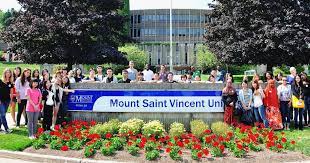
Mount Saint Vincent University
About Mount Saint Vincent University (quick facts)
-
What it is: A public, primarily undergraduate university in Halifax founded with a strong history in women’s education and a current institutional focus on equity, diversity and inclusion. MSVU emphasizes small class sizes, applied learning, and student supports.
-
Location / campus footprint: The Mount’s main campus sits on the Bedford Highway in Halifax (on Mi’kma’ki territory), with academic buildings, residences and student services clustered on a leafy campus about 8–10 minutes from downtown Halifax. See the campus map for building names and residence options.
-
Student body & scale: MSVU is a smaller university — total student headcount (undergrad + grad) is a few thousand, offering a close-knit campus environment and personalized access to faculty and supports.
Why choose MSVU? (strengths that matter to international students)
-
Small classes & accessible professors: If you value interaction and mentoring, Mount’s lower student-to-professor ratio is an advantage for coursework and research opportunities.
-
Work-experience opportunities: Most programs at the Mount have co-op/practicum/internship or work-placement options — helpful for building Canadian experience before graduation.
-
Strong student supports & inclusion: The university highlights EDIA initiatives, Indigenous supports, a Black Student Support Office, accessibility services, and dedicated international services to help newcomers settle.
-
Safe, attractive campus in Halifax: Halifax combines Atlantic-coast lifestyle, a lower cost of living than larger metros, and easy access to city amenities — good for students wanting balance between campus life and urban access.
University ranking / reputation (how MSVU compares)
-
MSVU is regionally well-regarded for teaching quality, social-impact initiatives, and research in select areas. Rankings vary by publisher; for example EduRank and Times Higher Education list MSVU in national/global ranking tables (useful for broad context but not the only decision factor). Focus on program reputation, experiential learning and graduate outcomes for international students
Campus locations & student life
-
Main campus: 166 Bedford Highway, Halifax — academic buildings (Seton Academic Centre, E. Margaret Fulton Communications Centre, Margaret Norrie McCain Centre), Rosaria Student Centre, residences (Assisi, The Birches, Westwood), art gallery and research houses. Campus map is online.
-
Student services on campus: International Student Advising, Academic Advising, Counselling, Career & Co-op Services, Library, Student Centre activities, clubs and athletics.
Types of courses, study levels & delivery modes
-
Undergraduate degrees: BA, BSc, BBA, BPR (Public Relations), BTh/Professional programs in areas like Applied Human Nutrition, Tourism & Hospitality Management, Child & Youth Study, etc. Many majors, minors and honours options.
-
Graduate programs: MS, MEd, and other professional/graduate diplomas (some course-based and thesis options). Graduate scholarships available for full-time grad students.
-
Certificates & diplomas: Several short-duration credentials and professional certificates exist for focused skills and bridging pathways.
-
Delivery modes: Predominantly on-campus (in-person) with some online course offerings and supports. Check each program’s page for exact delivery (hybrid/blended options vary, and certain in-person components are required for practicums/co-op). Online learning resources and academic supports are available.
Number of programs
-
MSVU offers around 70–80+ nationally-recognized programs across undergraduate and graduate levels (majors/minors, diplomas, certificates). For precise counts by faculty and the most current program list, consult the MSVU Academic Calendar/program pages.
Highlights & recent updates (what’s new / to watch)
-
Focus on social impact & equity: MSVU continues to invest in equity programs, Indigenous initiatives, Black student supports and community pathways. These are actively promoted in recent news and admissions communications.
-
Program & admission cycles: Typical intakes are Fall (September) — check application deadlines (e.g., UG application deadlines appear each year; some third-party sites show common May 1 UG deadlines for Fall entry). Always confirm deadlines on the official MSVU admissions page.
-
Campus projects & facilities: MSVU invests in campus facilities (teaching & research spaces, sustainability projects, student wellness facilities) — useful for student life and research opportunities.
Practical tips for international applicants
-
Check program-specific requirements: Some programs require portfolios (art), auditions (theatre/dance), or prerequisites (sciences). Consult the Academic Calendar for course requirements.
-
English language proof: Submit IELTS/TOEFL or accepted equivalents if your prior education was not in English. Minimum scores vary by program — verify the program page.
-
Scholarship attention: Apply early and ensure your application is complete — many entrance scholarships are allocated based on admission GPA at the time of offer.
-
Work experience & co-op: Use co-op/practicum opportunities to gain Canadian work experience — they strengthen employability after graduation.
-
Visa & study permit: Start your study-permit application only after you receive your official Letter of Acceptance and follow IRCC guidance for biometrics, processing times and work-on-campus privileges.
Scholarship
1) International Student Merit Scholarship (undergraduate)
-
What it is: A merit scholarship for prospective international students awarded at the time of acceptance. It’s intended for both first-year and transfer international students.
-
Duration: MSVU’s official page states the award may be four years for incoming students and two–three years for transfer students (depending on transfer credits).
-
Eligibility & selection: Awarded based on cumulative GPA and standardized test scores (as shown on your submitted transcripts/test results). Recipients must maintain a 3.2 cumulative GPA to keep the scholarship
-
Application: This scholarship is considered at the time of admission — you are reviewed when you apply; a separate scholarship application is typically not required for the entrance merit award. (See “Entrance Scholarships” and International FAQs.)
-
Amount: MSVU’s public pages describe the scholarship structure and duration but do not publish a single fixed dollar figure for this award on the main scholarship page. If you need the exact CAD amount for a specific intake/year, I can fetch the current dollar value from MSVU’s financial-aid office or program letters.
2) Entrance Scholarships & Endowed Awards (undergraduate)
-
What they are: MSVU maintains many entrance and endowed scholarships (named funds) that are awarded for outstanding academic achievement; some are automatically assessed at registration/admission, others require application documentation per the award terms. Examples and criteria are published in MSVU’s Entrance Scholarships pages.
-
International students: If you are a newly admitted international student coming directly from high school or an eligible transfer, you are automatically considered for many entrance scholarships based on your admission documents (transcripts / grades).
3) In-course scholarships & bursaries (current students)
-
What they are: Once enrolled, international students can apply for in-course scholarships (merit-based, based on most recent academic work) and bursaries (needs-based). These are awarded annually and require either automatic consideration or an application (check the award description).
-
Important: Government student loans (Canadian federal/provincial loans) are generally not available to international students — bursaries from MSVU are the main need-based option.
4) International Graduate Student Scholarship (master’s level)
-
What it is: A named scholarship intended to support full-time international graduate students at the master’s level. It is awarded annually; students entering any semester are considered but an application is required.
-
Other grad funding: MSVU also lists limited funding for thesis research and conference attendance and graduate bursaries for students with demonstrated financial need.
Eligibility rules & common conditions (practical checklist)
-
Apply for admission early and submit full transcripts and English-language test scores — many entrance awards are based on your admission application.
-
Automatic vs. applied awards: Entrance merit scholarships are usually automatic (assessed at acceptance). Many in-course scholarships and bursaries require an application once enrolled — read the award page for each item.
-
Maintain the GPA condition — the International Student Merit Scholarship requires a 3.2 cumulative GPA to maintain eligibility. If you fall below that, you may lose the renewal.
-
Full-time status — many scholarships and bursaries require you to be enrolled full-time; check the award rules.
-
Government funding: Canadian federal or provincial student loans are not available to most international students — plan for self-funding, scholarships, and MSVU bursaries if needed.
How scholarships are paid / applied
-
Entrance awards are usually credited to tuition or applied to the student account (not paid as cash). In-course awards and bursaries are administered per MSVU’s Financial Aid procedures — check the award terms for payment method and timing. (If you want, I can collect specifics on payment timing for each named award.)
Notes about third-party lists and different “Mount” schools
-
Some third-party pages or search results conflate Mount Saint Vincent University (Halifax, Nova Scotia) with other institutions whose names start with “Mount” (e.g., College of Mount Saint Vincent in New York). For official scholarship rules and dollar amounts always rely on msvu.ca pages (links above).