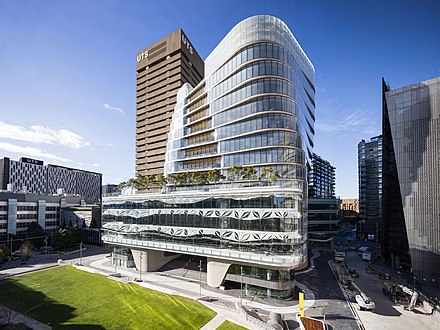
University of Technology Sydney
Situated in the heart of vibrant Sydney, University of Technology Sydney (UTS) is one of Australia’s most dynamic and rapidly rising universities. Established less than 50 years ago, it has quickly earned a reputation as a global leader in innovation, technology, and industry-focused education. UTS aims to prepare students for real-world challenges through a blend of world-class education, research excellence, and strong industry partnerships. Over the years, it has attracted a diverse student population from more than 130 countries, creating a vibrant international community.
Why Choose UTS
Choosing UTS means embarking on an educational journey where creativity, innovation, and industry readiness are at the centre of everything. It is widely recognised for producing graduates who are job-ready and globally competitive, thanks to its industry-driven curriculum and strong ties with major corporations. UTS stands out for its:
-
Global Perspective: Courses are designed with input from leading industry partners, ensuring graduates acquire relevant, real-world skills.
-
Innovative Learning Environment: With state-of-the-art facilities and cutting-edge research centres, UTS is at the forefront of fields such as artificial intelligence, sustainability, biotechnology, and design.
-
Industry Partnerships: Strategic collaborations with companies like Atlassian, Cisco, and BCG provide students with opportunities for internships, industry projects, and global placements.
-
Multicultural Experience: A large international student community enriches campus life, fostering cross-cultural understanding and collaboration.
-
Central Location: Situated in Sydney’s innovation precinct, UTS’s location places students close to major businesses, startups, and cultural hotspots, enhancing networking and employment opportunities.
Rankings & Recognition
UTS has consistently climbed global university rankings thanks to its academic excellence, research output, and international outlook. According to the latest rankings, UTS is ranked #96 in the world by QS World University Rankings 2026 and is among the top 150 universities globally in teaching, research, and sustainability by Times Higher Education (THE). Impressively, it is also ranked #1 young university in Australia and #11 globally by THE Young University Rankings 2024, demonstrating its rapid rise among the world’s leading institutions.
Campus Locations
UTS operates a single, expansive city campus located in Sydney’s inner-city precinct, just minutes from the central business district and major cultural centres. Known for its futuristic architecture and innovative learning spaces, the main buildings are spread across the following precincts:
-
Ultimo & Broadway Precinct: The heart of UTS, home to faculties across science, engineering, design, IT, and business.
-
Haymarket Precinct: Houses specialised research facilities, industry innovation hubs, and the Faculty of Law.
-
Powershift Precinct: Focused on business innovation and collaboration, often hosting large industry events and networking sessions.
The campus is well-connected with excellent public transport links, cultural amenities, and vibrant student facilities. Students enjoy access to libraries, innovation labs, collaborative spaces, and creative studios. Mental health services, career support, and student-run clubs further enrich campus life.
Types of Courses and Study Levels
UTS offers a comprehensive range of programs designed to cater to students at every stage of their academic journey — from foundational courses through to advanced research degrees. International students can choose from over 350 programs, including undergraduate, postgraduate, research, short courses, and online microcredentials.
Study Levels:
-
Foundation & Diploma Programs: Offered through UTS College, these pathway programs are ideal for students seeking preparation before entering undergraduate or postgraduate study.
-
Undergraduate Degrees: Typically 3- to 4-year programs across fields such as engineering, law, business, health, IT, and design. Programs often include industry-based projects and work placements.
-
Postgraduate Courses: Includes Master’s degrees, professional qualifications, and advanced certificates tailored to career advancement.
-
Research Degrees: PhD and Master’s by Research for those who wish to contribute to cutting-edge research.
-
Short Courses and Microcredentials: Flexible, shorter-duration courses designed for professionals and lifelong learners.
Modes of Learning
UTS offers flexible modes of learning to suit different preferences and needs, especially for international students:
-
On-Campus Learning: The traditional classroom experience with hands-on projects, lectures, workshops, and networking opportunities.
-
Blended Learning: A mix of online and face-to-face sessions to maintain flexibility while preserving hands-on interaction.
-
Fully Online Learning: Entirely remote learning options designed for those who cannot relocate or prefer to study from home.
Highlights of Studying at UTS
There are several compelling reasons why UTS is the destination of choice for many international students:
-
Industry Focus: Courses are developed in collaboration with global organizations, ensuring graduates are future-ready.
-
Research Leadership: UTS plays a leading role in addressing global challenges, focusing on sustainability, technology, health, and society.
-
Work-Integrated Learning: Opportunities to gain professional experience before graduation through internships, industry projects, and industry-linked research.
-
Global Partnerships: Exchange programs and collaborations with more than 230 universities worldwide expand students’ horizons.
-
Graduate Outcomes: Around 96% of UTS alumni find employment within four months of graduating.
Scholarship
The main scholarships (what they are and who they’re for)
-
UTS Academic Excellence International Scholarship — 30% of tuition
-
Who: High-achieving commencing international students (undergrad or postgrad coursework). Must commence full-time on campus in Sydney. No separate application — applicants are automatically considered when they apply for admission.
-
-
UTS Academic Merit International Scholarship — Value varies (e.g., 20% for 2025 intakes; 15% for 2026 intakes — check intake year)
-
Who: Commencing international students (undergrad or postgrad coursework). Some variants are region-specific (e.g., South Asia) with different benefit percentages. Automatic assessment — no separate scholarship application.
-
-
UTS Vice-Chancellor’s International Undergraduate Scholarship — Up to full tuition (Scholarship page shows “UTS Tuition Fees” as the value)
-
Who: Top high-achieving international applicants to undergraduate programs (e.g., minimum academic averages apply — the cohort page shows ~85% or equivalent as a typical entry bar). This scholarship requires a separate online scholarship application form (not always automatic).
-
-
UTS Scholarship for European Undergraduate Students — 40% of tuition
-
Who: Commencing undergraduates who are citizens of European countries and are based offshore prior to commencement. Automatic consideration for eligible applicants.
-
-
UTS Postgraduate International Scholarship (Master by coursework) — 20% of tuition
-
Who: Commencing international students enrolling in eligible Master’s by coursework programs (specific faculties listed in the Conditions of Award). The award is automatic (no separate application) and recipients must maintain satisfactory academic progress (e.g., WAM 50+ each session) and enrol full-time on campus.
-
-
LATAM International Postgraduate Coursework Scholarship — ~25% of tuition (region-specific)
-
Who: Commencing postgraduate students from Latin America enrolling in eligible programs. Usually automatic consideration. Conditions of Award PDFs contain full details and recipient caps (e.g., maximum number per year).
-
-
Other targeted awards
-
UTS has regional scholarships (South Asia, LATAM, Africa, SE Asia, etc.), IB/High-school achiever awards (e.g., IB scholarships for top IB Diploma graduates from particular regions), faculty-level scholarships (e.g., law, engineering), and UTS College pathway scholarships (discounts for Foundation/Pathway students that continue to UTS). Each has its own rules and sometimes limited recipient numbers
-
Eligibility patterns — what UTS commonly requires
-
International student status: must not be an Australian/New Zealand citizen or permanent resident.
-
Course mode: usually full-time, on-campus (Sydney) for the duration of the scholarship. “On campus” sometimes includes remote learning only where explicitly allowed; online/distance degrees are commonly excluded.
-
Academic merit: most awards are merit-based, using the qualification used for admission (e.g., Australian Year 12, IB, previous bachelor). Some awards set a minimum average (e.g., Vice-Chancellor’s scholarship shows ~85% for the Year 12 basis).
-
Region/citizenship requirements: many scholarships are region-restricted (e.g., South Asia, Latin America, Europe). Check each award for a country list.
-
No double-dipping: recipients are frequently not allowed to hold other UTS scholarships that together equal more than 100% of tuition. Government-sponsored students are often ineligible.
-
Ongoing progress: recipients usually must maintain minimum academic progress (example: WAM 50+ in each session for many postgrad awards) or risk suspension/termination.
Realities & fine print you must know
-
Automatic offers mean you may receive an offer letter for a scholarship together with your course offer — but some bigger awards require you to actively apply (e.g., Vice-Chancellor’s). Always read the offer letter carefully for conditions.
-
Scholarship durations are usually the standard duration of the course (or specified sessions) and the award may be exhausted early if you take reduced sessions or non-standard enrolment.
-
Academic misconduct, failure to maintain minimum WAM/progress, or change to residency status (e.g., gaining PR) can terminate the scholarship and may require repayment of benefits. Read the Conditions of Award carefully.
Top-tips to maximise your chance
-
Apply early for your course — many scholarships are competitive and program deposit/payment can be part of selection.
-
Aim for the highest possible documented academic average (transcripts, IB, or prior degree). Merit-based scholarships primarily use the qualification for admission as the metric.
-
If a scholarship asks for personal-statement responses (e.g., Vice-Chancellor’s application), treat those like mini-essays: show leadership, community impact, and why UTS is the right place for your goals.
-
Keep proof of exceptional circumstances ready (medical letters, etc.) in case you need to explain deferred enrolment or leave that would otherwise affect scholarship eligibility.
Programs
-
AUD 982
-
AUD 936
-
AUD 1050
-
AUD 875
-
AUD 1050
-
AUD 936
-
AUD 936
-
AUD 1050
-
AUD 1050
-
AUD 936
-
AUD 1050
-
AUD 898
-
AUD 968
-
AUD 1002
-
AUD 936
-
AUD 882
-
AUD 795
-
AUD 936
-
AUD 1050
-
AUD 875
-
AUD 744
-
AUD 19,840-34,080
-
AUD 19,840-34,080
-
AUD 1021
-
AUD 936
-
AUD 1021
-
AUD 1002
-
AUD 1002
-
AUD 3,963
-
AUD 3,096
-
AUD 968
-
AUD 936
-
AUD 2,833
-
AUD 19,840-34,080
-
AUD 948
-
AUD 19,840- 34,080
-
AUD 19,840-34,080
-
AUD 19,840- 34,080
-
AUD 19,840-34,080
-
AUD 4,383
-
AUD 1002
-
AUD 4,116
-
AUD 19,840-34,080
-
AUD 1094
-
AUD 19,840 - 34,080
-
AUD 4,116
-
AUD 968
-
AUD 19,840 - 34,080
-
AUD 806
-
AUD 1021
-
AUD 1021
-
AUD 1002
-
AUD 968
-
AUD 19,840-34,080
-
AUD 19,840 - 34,080
-
AUD 19,840 - 34,080
-
AUD 1062
-
AUD 968
-
AUD 19,840-34,080
-
AUD 936
-
AUD 1002
-
AUD 1002
-
AUD 1002
-
AUD 19,840 - 34,080
-
AUD 19,840 - 34,080
-
AUD 19,840-34,080
-
AUD 864
-
AUD 19,840-34,080
-
AUD 19,840-34,080
-
AUD 1347
-
AUD 806
-
AUD 3,803
-
AUD 3,096
-
AUD 1002
-
AUD 968
-
AUD 19,840 - 34,080
-
AUD 19,840-34,080
-
AUD 19,840 - 34,080
-
AUD 1294
-
AUD 19,840 - 34,080
-
AUD 806
-
AUD 3,963
-
AUD 3,963
-
AUD 4,116
-
AUD 19,840 - 34,080
-
AUD 4,195