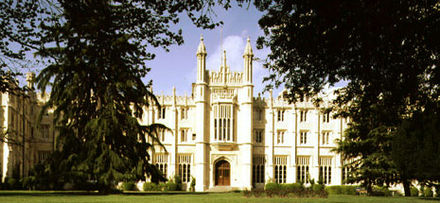
Richmond - The American University in London
About Richmond (quick snapshot)
Richmond is a private, not-for-profit university in London that offers a dual UK & US degree model rooted in an American liberal-arts approach while awarding UK degrees as well. Founded in 1972 and historically located at Richmond Hill, the university relocated its main London operations to a single modern campus in Chiswick Park in 2022. Richmond emphasises an international student body, liberal arts breadth, and professional preparation.
Why choose Richmond? (student-friendly reasons)
-
Dual degrees (UK & US) — Graduates receive both a UK and a US qualification (valuable if you want flexibility for work or further study in either system).
-
Small/community feel + global focus — Richmond is smaller than most UK public universities, which often translates to smaller class sizes, close faculty contact and an international campus culture.
-
American liberal-arts style — Broad curriculum and “liberal arts” core courses that build communication, critical thinking and cross-disciplinary skills. This suits students who want both depth and breadth.
-
Career & internship links — The university promotes internships, placements and career support embedded in its student services.
Rankings & reputation (how to read them)
-
Richmond is not typically ranked alongside large public research universities in global league tables (e.g., QS/THE focused rank lists), but it does appear in specialized guides and has won awards (for example innovation awards in some global ranking lists). Treat Richmond as a small, specialist private university with strengths in international education and dual accreditation, rather than a broad research powerhouse.
-
Practical note for applicants: look at subject-level reputation, alumni outcomes and employer links rather than only global ranking numbers.
Campus locations & student life
-
Primary London campus — Chiswick Park (since 2022): modern facilities and consolidated central operations in west London. The move to Chiswick Park was part of a strategic consolidation to improve facilities and links to employers.
-
Historic Richmond Hill site: Richmond’s long-standing traditional campus in Richmond Hill (Grade II listed buildings) is associated historically with the university, though parts of campus activity and property usage have changed in recent years. (Note: several news items indicate changes in ownership/use of the Richmond Hill site.)
-
London city experience: Richmond positions itself as offering the “best of London” — access to museums, internships and cultural life while being based in a pleasant west-London location.
Types of courses & study levels
Richmond offers a typical American-style range adapted to UK regulations:
-
Undergraduate (Bachelor’s) — 3- or 4-year American liberal-arts style degrees in subjects such as Business, International Relations, Film, Computer Science, Arts, Communications, etc. (Undergrad course list available on the website).
-
Postgraduate (Master’s / MBA / specialist Masters) — Taught master’s programmes (e.g., MBA, Luxury Brand Management, Art History & Visual Culture) with international intake cycles.
-
Short & exchange programmes — Study-abroad semesters, summer schools and transfer arrangements for US and international students.
Mode of learning (onsite / e-learning / blended)
-
Richmond currently offers face-to-face, on-campus teaching (now operating at the Chiswick Park campus) while maintaining online learning resources and contingencies if required. Some short programmes, pre-sessional English provision and options for transfer/visiting students provide flexible pathways. Check the programme page for specific online/blended options.
Number of programmes offered
-
UCAS and Richmond course pages show a broad but focused portfolio: around ~40 undergraduate courses and ~10 postgraduate courses listed (catalogue changes over time — always check course-finder for the current list). That makes Richmond comparable to a small specialist university in program breadth.
Highlights & strengths (what students tell me matters)
-
Dual UK & US credentialing gives flexibility for careers and study in both systems.
-
Modern consolidated campus in Chiswick Park with updated facilities intended to enhance the student experience and employer connections.
-
Liberal arts curriculum + professional programmes — good for students seeking both broad critical skills and subject depth (business, arts, media, international relations).
-
International community & internship pathways — career and internship support is part of the student services offering.
Practical checklist for international applicants
-
Decide level & subject: use Richmond’s course finder (undergraduate / postgraduate pages) to shortlist programmes.
-
Check entry requirements: Richmond follows US/UK entry models — check GPA/IB/A-level or equivalent, plus English requirements.
-
Scholarship review: after you receive an offer you’ll be automatically considered for most scholarships, but read the scholarships pages for specifics and deadlines.
-
Visa & arrival: confirm which campus hosts your programme and the visa guidance on Richmond’s International/Admissions pages (they advise on student visas and provide support).
-
Visit or contact: attend an Open Day or request a campus tour/virtual meeting to see facilities and ask about internships, housing and student support.
Scholarship
-
International Undergraduate Scholarships / Liberal Arts Awards — Richmond’s Liberal Arts Awards (celebrating their liberal-arts model) are available to international undergraduate applicants and can reduce annual tuition. Amounts and availability vary by intake; retention is conditional on academic progress and engagement.
-
International Postgraduate Scholarships — Richmond advertises a suite of postgraduate awards for international students; award level is based on academic profile (GPA / equivalent). Specific reductions and which intakes they apply to are listed on the postgraduate funding pages for the intake year.
-
Country / Residency specific awards — Richmond provides different pages and awards for UK/EU, US and international fee statuses (some awards are specifically for US students, UK/EU, etc.). Check the page that matches your fee-status.
-
Other awards & bursaries — Richmond runs targeted bursaries (e.g., Cyril Taylor Bursaries for certain students) and alumni discounts for postgraduate study.
How Richmond decides & applies scholarships (important mechanics)
-
Automatic review after your offer: once you have an offer to study at Richmond, the university will normally automatically review you for scholarship eligibility (you often do not need a separate scholarship application unless specified). Always check the specific scholarship page for that award’s rules.
-
Merit basis (academic achievement): many international awards use your academic record (GPA / grades) to set award levels. Postgraduate awards page explicitly states award level is based on academic achievement.
-
Retention conditions & renewal: scholarships are usually renewable provided you maintain required academic standards and full-time enrolment. Richmond’s scholarship policy notes renewable awards up to a maximum number of semesters and academic standing requirements.
-
Combination/exclusions: some postgraduate awards cannot be combined with other university funding.
Typical eligibility rules (what you’ll need)
-
Overseas/international fee status (check which award applies to your fee status).
-
An offer to study — conditional or unconditional (most awards require an offer). Richmond reviews eligible applicants after offers are made.
-
Strong academic record — transcripts/grades that meet the award’s merit thresholds. Postgraduate awards list GPA/grade thresholds for top awards.
-
Full-time enrolment — many awards require you to remain full-time; part-time study can make you ineligible or lead to losing the award.
-
Participation / engagement — some undergraduate awards require ongoing engagement in university life and meeting minimum GPA to retain the award.
Known examples / sample amounts (what Richmond publishes)
-
UK Liberal Arts Award (example for UK students): Richmond’s UK scholarship example reduces the standard UK tuition fee from £9,250 to £6,165 (a £3,085 saving per year).
-
International postgraduate awards: Richmond states that international postgraduate awards exist and that the level of award depends on academic achievement; however, most international award values are not listed as a single fixed table on a single page — they vary by intake and programme.
Deadlines & timing — what to watch for
-
Richmond recommends early application for merit scholarships and notes specific application/deadline guidance for some awards (for example the US Richmond Scholars deadline elsewhere may be Dec 1 — if you’re applying for merit-based or need-considered awards, apply early). Always check the scholarship page for your intake’s deadlines.
Practical tips to improve your chance of the best awards
-
Apply early and aim to submit a complete application well before intake deadlines.
-
Submit strong academic evidence (transcripts, references, any awards). Merit awards are competitive.
-
Keep full-time enrolment and meet GPA/engagement conditions to retain renewable scholarships. Read the scholarship policy for GPA thresholds.
-
Ask admissions for clarity — if the award value or combining rules aren’t public for your programme, request a written confirmation of how the scholarship will appear on your invoice and whether it affects CAS or visa paperwork.
-
Look for external scholarships too — Richmond’s pages and external scholarship directories list outside funding schemes you may apply to.