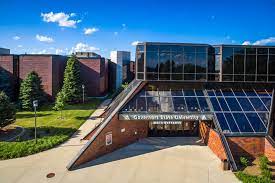
Governors State University
About Governors State University (GovState)
Governors State University was founded in 1969 as a public university serving Chicago’s south suburbs. It has grown into the region’s public comprehensive university with a mission to provide accessible, career-relevant education for a diverse student population. GovState emphasizes flexible pathways (transfer-friendly policies), community engagement and applied programs that connect to regional employers.
Why choose GovState? (straight talk for international students)
-
Affordable, regionally focused public university: GovState’s tuition and fees tend to be lower than many private institutions in the Chicago metro area, and it focuses on serving commuter and transfer students — useful if you want cost-effective study near Chicago.
-
Strong online & hybrid options: GovState offers many fully online degree programs and more than 120 online classes each semester, giving flexibility if you need remote study options before/after arrival.
-
Programs aligned with careers: With STEM, health, business and education programs designed for local workforce needs, the university is practical for students who want applied skills and internship pathways.
-
Diverse, supportive campus: GovState highlights a diverse student body and supports transfer students and international partners — they maintain formal international partner agreements and discounted tuition arrangements in some cases.
University ranking & reputation (how to interpret)
GovState is regionally accredited by the Higher Learning Commission (HLC) and holds program accreditations where applicable. It has been recognized in areas such as social mobility and some subject rankings in past U.S. News listings. Note: GovState is a regional public university focused on access and applied programs rather than being a large research flagship — weigh program quality and accreditation for your field rather than overall ranking alone.
Campus locations & transport
-
Main campus: University Park, Illinois (in the Chicago Southland). The campus sits near I-57 and I-80 and is approximately 37 miles south of downtown Chicago. Use the campus map and directions page to plan travel and housing.
-
On-campus facilities: GovState has academic buildings, recreation facilities (pool, gym), a library and student services offices. The campus layout is documented on the building maps.
Types of courses & study levels
GovState offers a traditional spread of academic credentials:
-
Undergraduate: 31 bachelor’s degree programs.
-
Graduate: 27 master’s programs and 1 Ed.S. (education specialist).
-
Doctoral: 5 doctoral programs.
-
Certificates: 27 certificate programs.
This mix includes majors in business, information technology, education, health & human services, nursing, social work, public administration, and more.
Mode of learning — onsite, online, blended
-
On-campus: Traditional in-person classes and campus services for students living or commuting to University Park.
-
Online & hybrid: GovState actively offers fully online degree programs at bachelor’s, master’s and doctoral levels, plus 120+ online classes each semester and many hybrid courses. This flexibility makes GovState a good option if you need to begin studies remotely or mix study with work. For visa purposes: fully online study typically does not qualify for F-1 benefits — confirm modality and I-20 eligibility with the International Office.
Number of programs offered (summary)
GovState publishes the following program totals: 31 bachelor’s, 27 master’s, 5 doctoral, 1 Ed.S., and 27 certificates — a broad offering for a regional public university. For a program-by-program list, use the A–Z program listing on the website.
Highlights & student services
-
Transfer-friendly pathways: GovState was created to serve transfer students and continues to be transfer-friendly, which helps international students who start at other institutions.
-
Active online campus: A strong portfolio of online classes and degree programs means continuity if travel or visa timing delays arrival.
-
Student supports: The university provides advising, career services, recreation, legal clinic services and a Newsroom that posts campus updates and scholarship announcements.
Practical checklist for international applicants
-
Pick a program & check modality: Confirm whether the program is available on-campus (qualifies for I-20) or online-only (may not). If you need an F-1 visa, choose a program with on-campus residency or hybrid elements approved by ISS.
-
Confirm accreditation for your field: GovState is regionally accredited by HLC; for some professions confirm program-level accreditation (e.g., nursing, business) if you plan licensure at home or in the U.S.
-
Ask about scholarships & campus jobs: Contact Financial Aid and the GovState Foundation for foundation scholarships and Scholarship Universe listings. Also ask International Programs about partner discounts.
-
Plan travel & housing: Use the campus maps and directions page to plan arrival; University Park is ~37 miles from downtown Chicago — factor commuting time and housing.
-
Proof of funds & I-20 timeline: Request an official I-20 cost estimate early and ask how scholarships will be reflected in the SEVIS I-20 documentation.
Scholarship
-
Institutional scholarships via Scholarship Universe (central portal)
-
GovState uses Scholarship Universe (linked with MyGSU) to match students to institutional and external awards; both undergraduate and graduate students are encouraged to complete their Scholarship Universe profile to get matched. The more you complete there, the more matches you’ll receive.
-
-
GovState Foundation & Alumni Scholarships
-
The GSU Foundation and Alumni Association award donor-funded scholarships to deserving students. These are a primary source of institutional support for students (including some awards that international students may be eligible for depending on donor restrictions).
-
-
Study-Abroad Scholarships (for students from GovState studying abroad)
-
If you are a GovState student planning to study abroad, there are specific study-abroad scholarship programs (GovState Study Abroad Scholarship, Gilman-eligible resources, Fund for Education Abroad, Critical Language & Freeman-Asia awards) you can apply for — awards range from modest campus awards up to nationally-administered awards like the Gilman. (Note: these are generally for GovState students going overseas, not for incoming international students coming to GovState.)
-
-
Program/Departmental, DDP & Special Awards
-
There are program-level scholarships (e.g., for Dual Degree Program (DDP) students) and other competitive awards where committees review essays, statements, and other materials. See the scholarship details pages for lists of named awards and application criteria.
-
-
External scholarships & country-specific awards
-
GovState students (including internationals) are encouraged to pursue outside scholarships — Scholarship Universe surfaces many external opportunities; other platforms and home-country governments may also offer support.
-
Who is eligible (practical rules)
-
International (F-1 or other non-U.S.) students:
-
Are not usually eligible for U.S. federal aid (FAFSA) but may qualify for institutional scholarships, Foundation awards, departmental funding, and external scholarships. Expect limited options compared to U.S. citizens.
-
-
Study-Abroad awards:
-
Available to GovState students who will study abroad (requirements vary by award — e.g., Gilman requires Federal Pell Grant recipients; GovState’s own awards have application deadlines and faculty recommendation requirements).
-
-
Program-specific & donor restrictions:
-
Some Foundation/Alumni scholarships have donor restrictions (specific majors, residency, year in school).
-
Documents you’ll commonly need
-
Official academic transcripts (translated & evaluated if non-English)
-
Passport copy (for international ID/verification)
-
Proof of English proficiency (if the scholarship or program asks)
-
Resume/CV and personal statement / scholarship essay
-
Letters of recommendation (some Foundation or Study-Abroad awards require faculty references in sealed envelopes)
-
Any donor-specific documents (e.g., proof of residency) where required.
Renewal & continuing eligibility — what to expect
-
Many GovState scholarships require satisfactory academic progress (minimum cumulative GPA) and continuous enrollment to renew. Donor awards and Foundation scholarships often specify renewal criteria — check your award letter for exact conditions.
Practical tips from an admissions/counselling perspective
-
Complete Scholarship Universe thoroughly— it’s GovState’s central matching tool; more answers → more matches.
-
Apply early — some awards have early deadlines or limited funds. Donor-funded scholarships can be competitive and limited in number.
-
Target Foundation & departmental awards — smaller donor scholarships are often easier to win than large, competitive awards; read each award’s donor restrictions carefully.
-
If you plan to study abroad, pursue Gilman/Freeman/Critical Language — these national awards can combine with GovState’s own study-abroad awards to lower costs significantly.
-
Talk to Financial Aid and OIS early — clarify whether a scholarship will affect your I-20 funding requirement and whether donor awards count toward documented funding for visa purposes. Advisors can also point to external funding sources.
Caveats & important notes
-
Federal (FAFSA) aid is typically unavailable to international students. GovState explicitly states limited options for international students; your primary sources will be Foundation awards, institutional scholarships, and external scholarships. Plan for partial funding rather than expecting full federal support.
-
Some scholarships have donor restrictions (major, residency, class year) — always verify the fine print.
-
Study-abroad scholarships are for GovState students going overseas — they don’t fund international students coming to GovState. If your goal is to come to GovState from abroad, study-abroad awards are not applicable.
Programs
-
USD 626 (per credit hour)
-
USD 626 (per credit hour)
-
USD 626 (per credit hour)
-
USD 980 (per credit hour)
-
USD 626 (per credit hour)
-
USD 626 (per credit hour)
-
USD 980 (per credit hour)
-
USD 626 (per credit hour)
-
USD 980 (per credit hour)
-
USD 626 (per credit hour)
-
USD 626 (per credit hour)
-
USD 626 (per credit hour)
-
USD 626 (per credit hour)
-
USD 626 (per credit hour)
-
USD 980 (per credit hour)
-
USD 626 (per credit hour)
-
USD 626 (per credit hour)
-
USD 626 (per credit hour)
-
USD 626 (per credit hour)
-
USD 980 (per credit hour)
-
USD 626 (per credit hour)
-
USD 626 (per credit hour)
-
USD 980 (per credit hour)
-
USD 626 (per credit hour)
-
USD 980 (per credit hour)
-
USD 626 (per credit hour)
-
USD 626 (per credit hour)
-
USD 626 (per credit hour)
-
USD 626 (per credit hour)
-
USD 626 (per credit hour)
-
USD 626 (per credit hour)
-
USD 626 (per credit hour)
-
USD 980 (per credit hour)
-
USD 626 (per credit hour)
-
USD 980 (per credit hour)
-
USD 626 (per credit hour)
-
USD 626 (per credit hour)
-
USD 626 (per credit hour)
-
USD 980 (per credit hour)
-
USD 980 (per credit hour)
-
USD 955 (per credit-hour)
-
USD 626 (per credit hour)
-
USD 626 (per credit hour)
-
USD 626 (per credit hour)
-
USD 980 (per credit hour)
-
USD 980 (per credit hour)
-
USD 626 (per credit hour)
-
USD 626 (per credit hour)
-
USD 626 (per credit hour)
-
USD 626 (per credit hour)
-
USD 626 (per credit hour)
-
USD 980 (per credit hour)
-
USD 626 (per credit hour)
-
USD 626 (per credit hour)
-
USD 980 (per credit hour)
-
USD 626 (per credit hour)
-
USD 626 (per credit hour)
-
USD 626 (per credit hour)
-
USD 626 (per credit hour)
-
USD 626 (per credit hour)
-
USD 980 (per credit hour)
-
USD 626 (per credit hour)
-
USD 626 (per credit hour)
-
USD 626 (per credit hour)
-
USD 626 (per credit hour)
-
USD 626 (per credit hour)
-
USD 626 (per credit hour)
-
USD 626 (per credit hour)
-
USD 626 (per credit hour)
-
USD 626 (per credit hour)
-
USD 626 (per credit hour)
-
USD 626 (per credit hour)
-
USD 626 (per credit hour)
-
USD 980 (per credit hour)
-
USD 626 (per credit hour)
-
USD 980 (per credit hour)
-
USD 626 (per credit hour)
-
USD 626 (per credit hour)
-
USD 626 (per credit hour)
-
USD 980 (per credit hour)
-
USD 980 (per credit hour)
-
USD 626 (per credit hour)
-
USD 626 (per credit hour)
-
USD 980 (per credit hour)
-
USD 955 (per credit-hour)
-
USD 626 (per credit hour)
-
USD 626 (per credit hour)
-
USD 626 (per credit hour)
-
USD 626 (per credit hour)
-
USD 626 (per credit hour)
-
USD 626 (per credit hour)
-
USD 626 (per credit hour)
-
USD 626 (per credit hour)
-
USD 626 (per credit hour)
-
USD 980 (per credit hour)
-
USD 626 (per credit hour)
-
USD 626 (per credit hour)
-
USD 626 (per credit hour)
-
USD 626 (per credit hour)
-
USD 980 (per credit hour)
-
USD 1139 (per credit-hour)
-
USD 626 (per credit hour)
-
USD 980 (per credit hour)
-
USD 1139 (per credit-hour)
-
USD 980 (per credit hour)
-
USD 626 (per credit hour)
-
USD 1139 (per credit-hour)
-
USD 980 (per credit hour)
-
USD 626 (per credit hour)
-
USD 626 (per credit hour)
-
USD 626 (per credit hour)
-
USD 626 (per credit hour)
-
USD 626 (per credit hour)
-
USD 626 (per credit hour)
-
USD 626 (per credit hour)
-
USD 626 (per credit hour)
-
USD 626 (per credit hour)
-
USD 626 (per credit hour)
-
USD 626 (per credit hour)
-
USD 626 (per credit hour)
-
USD 626 (per credit hour)
-
USD 626 (per credit hour)
-
USD 980 (per credit hour)
-
USD 980 (per credit hour)
-
USD 626 (per credit hour)
-
USD 626 (per credit hour)
-
USD 844 (per credit hour)
-
USD 626 (per credit hour)
-
USD 626 (per credit hour)
-
USD 626 (per credit hour)
-
USD 626 (per credit hour)
-
USD 980 (per credit hour)
-
USD 626 (per credit hour)
-
USD 626 (per credit hour)
-
USD 626 (per credit hour)
-
USD 626 (per credit hour)