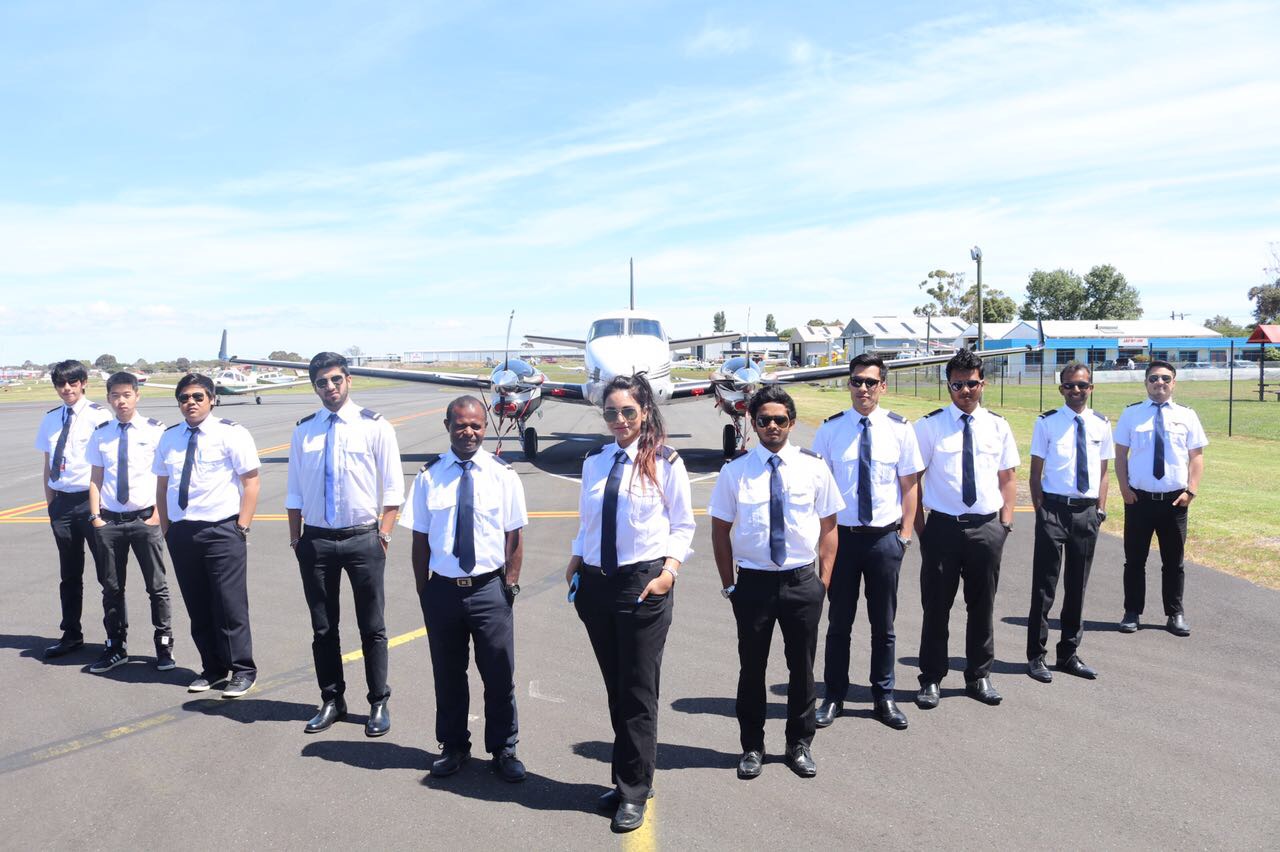
Australian National Airline College
Australian National Airline College (ANAC) is a private, vocational flight training provider based in Melbourne that has been training pilots since around 1990. It operates as Moorabbin Aviation Services Pty Ltd trading as ANAC and delivers CASA-approved flight training and CRICOS-registered courses for international students.
Why choose ANAC (short, student-focused reasons)
-
CASA-approved training (national aviation regulator) — meaning licences are taught to Australian regulatory standards.
-
CRICOS registration — accepts international students with student visas.
-
Airline/industry pathways — ANAC promotes airline-ready training and many graduates work for airlines worldwide.
-
Practical focus & fleet access — maintains a relatively high aircraft:student availability (advertised as ~1 aircraft to 6 students) and a multi-aircraft fleet for hands-on flying time.
Approvals & recognition (important)
-
CASA approvals (Civil Aviation Safety Authority).
-
CRICOS provider (so international students can enrol on student visas).
-
Registered Training Organisation (RTO) under the Australian Qualifications Framework; ANAC also notes CAAC (China) approvals for some training arrangements.
Campus locations / training bases
-
Moorabbin Airport (Melbourne) — ANAC’s head office and main campus for many international students.
-
Mangalore Airport (regional Victoria) — used for cadet/airline training blocks.
-
Echuca Airport — regional campus (availability for international students may vary).
Types of courses & study levels (what you can expect)
ANAC’s offerings focus on pilot licences, diplomas and ratings (practical + ground theory). Common items shown in ANAC materials and third-party listings:
-
Diploma of Aviation pathways (integrated/packaged programs leading to a Commercial Pilot Licence (CPL) — aeroplane).
-
Instrument Rating / Multi-Engine ratings (IR, ME).
-
Private Pilot Licence (PPL) and short courses (type ratings, refresher courses).
-
Type Ratings and special courses (e.g., King Air, Citation listed in older brochures).
Program lengths vary: short certificates to diplomas (examples: some diploma programs listed 25–68 weeks depending on stream).
Mode of learning
-
Onsite practical flying (major component) combined with classroom/theory sessions. Ground theory is typically classroom-based but some providers offer blended or online theory components — however the flying itself is necessarily in-person. For CRICOS international delivery the practical/on-site training is required.
Number of programs offered
-
Public listings show a small, focused catalogue (several core diploma/licence pathways plus short courses and type ratings). Third-party education sites summarize this as around 2 main AQF courses plus several licences/ratings and short programs; ANAC focuses on airline pilot pathways rather than a large university-style program list.
Fees (international student indication)
-
Third-party listings estimate first-year tuition ranges for diploma/UG-level aviation pathways roughly AUD ~36,000 to ~63,000 (figures vary by program, duration and what's included). Always confirm current fees directly with ANAC before applying.
Highlights & selling points (at a glance)
-
Long-standing flight school with airline pathway focus (since ~1990).
-
CASA & CRICOS approvals — suitable for international students seeking Australian licences.
-
Fleet and regional campus options (Moorabbin + Mangalore + Echuca) to access different flying conditions and training blocks.
Scholarship
Major items to consider
-
Airline / industry scholarships (big impact on accommodation/costs but limited): e.g., Qantas Academy diversity scholarships (female & First Nations focused, support for accommodation up to amounts stated).
-
University scholarships for aviation degrees (larger dollar amounts, e.g., Destination Australia via universities such as RMIT). Example: RMIT’s Destination Australia scholarship offers up to AUD 15,000 per year for the Bachelor of Aviation (Pilot Training) for eligible students. This is a major pathway for international students who choose a university degree + flying training.
-
Provider / RTO scholarships & training credits: many flight schools offer small scholarships/credits (e.g., Learn To Fly provides ~$3,000 training credit scholarships for overseas students meeting their criteria). These are useful for partial cost relief.
-
Industry & not-for-profit bursaries (Flying Start, Air Pilots Australia, local aero club scholarships) — ranges vary and usually cover a block of flying hours or instrument training rather than full programmes.
Selected scholarships (details & eligibility)
-
Qantas Group Pilot Academy Scholarships
-
Who: targeted equity-based scholarships — historically aimed at increasing diversity (female cadets and Aboriginal & Torres Strait Islander cadets).
-
What they cover: support for accommodation and living costs (Qantas noted scholarships worth up to ~AU$30,000 for accommodation/food for academy attendees — tuition is generally additional). Number of scholarships and target groups were increased in recent initiatives.
-
How to apply: monitor the Qantas Pilot Academy pages and FAQs; applications are time-limited and often require selection tasks and an aptitude/fitness process.
-
-
RMIT / Destination Australia (for Bachelor of Aviation)
-
Who: international students enrolling in eligible regional courses (Destination Australia is government funded but administered by universities).
-
Value: AUD 15,000 per year for Bachelor of Aviation (Pilot Training) (amounts vary by course and year).
-
How to apply: apply to RMIT (or another participating uni) and the scholarship through uni scholarship portals; check eligibility (residency, study load, course enrolment).
-
-
CAE — Women in Flight & other CAE awards
-
Who: CAE programs sometimes offer gender-focused scholarships and awards (Women in Flight) and other targeted grants. These can cover specific training modules/ratings.
-
How: check CAE’s “Become a pilot” / scholarships page; applications often require motivation statements.
-
-
Learn To Fly (provider scholarships / training credit)
-
Who: Learn To Fly Melbourne offers small scholarships (examples: AUD 3,000 training credit) for overseas students already enrolled in their diploma programmes (or meeting set milestones). Good for partial cost reduction.
-
-
Community / aero club & NGO scholarships
-
Organisations like Flying Start, Air Pilots Australia, local aero clubs and foundations occasionally offer hour-based scholarships (e.g., funding for first 20 flight hours, instrument training credits). These are competitive and require local nominations or applications.
-
Eligibility & application tips for scholarships
-
Typical eligibility: academic record, English language competence, medical fitness (Class 1/2 aviation medical for flying), visa status (must be eligible to study full time), and sometimes residency or diversity criteria. Airline scholarships often include aptitude assessment and interviews.
-
Documents to prepare: CV, personal statement (why aviation, career plans), academic transcripts, English scores (IELTS/TOEFL if required), references, evidence of finances if the scholarship is partial. For university scholarships, also attach offer letter/CRICOS course code.
-
Medical & background checks: many scholarships require you to pass CASA medicals and police checks — get these done early if possible.
-
Application tips: show commitment to aviation, outline clear career pathway (how the scholarship enables airline entry), include team/community work (airlines like leadership/community engagement), and highlight any prior flying/related experience.
Recent developments & cautions (must know)
-
Policy & market risk: there have been federal discussions about caps on overseas student enrolments which could affect capacity and places for international students — this has created industry concern. Always verify current government rules and how they impact CRICOS quotas for providers.
-
Provider failures: there have been notable collapses of some flight schools in recent years; check latest financial/operational status, student protection measures, and refunds/tuition assurance before paying large deposits.
Practical next steps — a checklist for you
-
Shortlist 3 providers (one big academy, one university pathway, one regional school).
-
Check scholarships on each provider’s scholarship page and university scholarship portals (RMIT/CAE/Qantas). Save deadlines.
-
Prepare documents: transcript, IELTS/English evidence, CV, statement, medical (start CASA medical process early).
-
Check living costs & accommodation (academy campuses vs private renting). Qantas Academy offers on-site housing for many cadets.
-
Ask for a pre-enrolment Q&A with the provider (ask refund policy, training schedule, fleet availability, job placement rates).