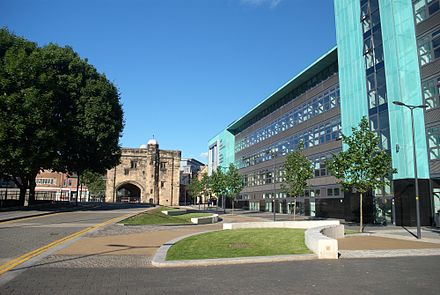
De Montfort University (DMU)
About DMU
DMU is a public university located in Leicester, England, originally founded in 1870 (as Leicester School of Art) and attaining university status in 1992.
It offers a wide range of undergraduate, postgraduate, and foundation programmes, and emphasises employability, industry links and internationalisation.
The university has several faculties, for example: Arts, Design & Humanities; Business & Law; Health & Life Sciences; Computing, Engineering & Media.
Why choose DMU?
Here are some key reasons (especially for international students) why DMU may be a good choice:
-
International community: DMU states that thousands of international students from 130+ countries study there every year.
-
Strong focus on employability and industry-relevant programmes. DMU mentions that many courses include placement years and links with professional accreditation.
-
“Block teaching” approach: DMU advertises that you focus on one module/subject at a time, rather than many simultaneous, which might help study-life balance.
-
Modern campus location in Leicester: central, accessible, and the city is affordable compared to some UK cities.
-
Scholarships & support: DMU offers dedicated scholarships for international students which helps manage cost. (See later section)
University ranking & recognition
Here’s a summary of how DMU appears in rankings and official quality metrics (for context):
-
DMU achieved Gold in the UK Teaching Excellence Framework (TEF) – meaning the highest standard of teaching, learning and outcomes according to UK Government assessment.
-
According to specialist guides: DMU is placed in the band 801-1000 in QS World University Rankings (2022) and 601-800 in Times Higher Education global rankings (2022).
-
On more UK-specific league tables, the university is ranked roughly around 100-120 region (depending on subject and year).
-
While the global ranking is modest, DMU’s strengths are in teaching, employability, accreditation, industry linkage rather than high-end research output.
Campus locations & student experience
-
The main campus is in Leicester, England – centrally located in the city, near Leicester Castle and city centre amenities.
-
The campus has undergone major investment (for example new buildings, modern facilities) and is described as a “campus of the future” with creative and tech-enabled spaces.
-
For international students, having a university in a city like Leicester means access to UK culture, transport links, accommodation and student services. DMU emphasises being a campus-based university in a city environment.
-
Accommodation, city life, student union, clubs and diverse student body are mentioned in DMU’s materials for international students.
Types of courses & study levels
DMU offers a broad range of study levels:
-
Undergraduate (Bachelor’s, Honours degrees) in many subject areas (business, computing, arts, engineering, design, humanities).
-
Postgraduate taught (Master’s) and research degrees. Many programmes emphasise professional accreditation or placement/internship components.
-
Foundation years / international pathways / distance / part-time: DMU mentions foundation courses, distance learning options and pathways for international students.
Mode of learning (on-campus / e-learning / blended)
-
DMU is primarily a campus-based university, i.e., on-site teaching in Leicester. International student material emphasises “campus-based university in the city centre”.
-
Blended and distance learning: DMU offers some flexible delivery, possibly part-time or distance/online options (for example via “distance learning courses” mention).
-
For full online programmes the information is less emphasised—but you will need to check individual course pages if you require 100% online learning.
Number of programmes offered
-
According to one information source, DMU offers “more than 300” courses at foundation, undergraduate and postgraduate levels.
-
Another source states “500+ degree programmes” including undergraduate and postgraduate.
-
So you can assume a large and diverse programme catalogue (hundreds) across disciplines, giving international students many choices.
Highlights & strengths
-
DMU’s Gold in the Teaching Excellence Framework indicates a strong focus on teaching quality, student outcomes and learning experience.
-
Strong career/employability orientation: DMU promotes placements, internships, industry links and professional accreditation in many courses.
-
Internationalised campus: Students from 130+ countries; friendly to international student needs (visa support, student services).
-
Modern campus investments: New buildings, up-to-date facilities especially for design, engineering, media.
-
Unique teaching approach (block teaching) which may reduce assessment overload and improve learning experience.
Practical checklist for international applicants
Here’s what you should do next:
-
Narrow down your subject(s) of interest (e.g., computing, design, business) using DMU’s course finder and check which level (undergraduate/postgraduate) suits you.
-
Check the entry requirements for your country (qualifications, English language, any portfolio if needed).
-
Review the fees + scholarships carefully: look at the Global Access and other schemes, and ensure you meet deposit deadlines for eligibility.
-
Check mode of study for your chosen course: whether on-campus, part-time or any online/blended options.
-
Verify accommodation, visa support and international student services (DMU has dedicated international office).
-
Attend a virtual open day or contact DMU’s international admissions team to ask any specific questions (for your country, for scholarship eligibility, for placement year).
-
Submit your application early (to meet scholarship deadlines) and prepare your finances (tuition + living in Leicester).
Scholarship
DMU publishes a number of scholarships and discounts for overseas students. Key ones include:
-
Global Access Scholarship (2025/26 entry)
For full-time undergraduate and postgraduate taught degrees, starting Sept 2025 or Jan 2026.-
Undergraduates: automatic if you meet criteria & pay deposit in time. Eg: Level 4, 5 or 6 entries get a fee reduction.
-
Postgraduates: different amounts depending on subject area (e.g., Business & Law, Computing/Engineering & Media, Health & Life Sciences).
-
Example values: UG £2,000 off; PG £2,000-£3,000 off depending on subject.
-
Additional early full-fee payment discount: e.g., £500 extra if you pay full tuition before deposit deadline (for UG) in addition to Global Access.
-
-
Global Partnerships Scholarship (2025/26 entry)
For international students who are originating from or currently studying at one of DMU’s global academic partner institutions (for undergraduate entry).-
Awards include: 1 full scholarship (i.e., full tuition) + 8 awards of £8,000 for single year of study (UG).
-
Requires a written submission as part of the application.
-
-
Other international-student awards
-
The “International Scholarship” / “International Scholarship Award” (earlier years) offering fee reductions for international students.
-
Full-fee payment discount: If you pay full tuition (or full first-year fees) by a certain early deadline you may get an additional discount (for first year) in addition to other scholarships.
-
Postgraduate Alumni Discount: If you are a DMU graduate pursuing certain postgraduate taught courses, you may get discount (for UK/EU students) — note: international fee status may differ.
-
Eligibility & Terms – what you must check
Here are the main rules and conditions you should be aware of:
-
The scholarship (for international students) applies only to those who are assessed by DMU as having “overseas international student status” and paying the overseas/ international fee rate.
-
Some types of courses are excluded: e.g., International Year Zero, International First Year, International Foundation, Incorporated Master’s programmes are not eligible for many of these discounts/scholarships.
-
A student can only receive one DMU scholarship for their programme. If a student qualifies for multiple, DMU will award the one that is most beneficial.
-
Scholarships are usually applied to tuition fee remissions/discounts, not cash payments. They reduce your tuition bill rather than provide extra funding for living costs.
-
For many scholarships you must have an offer on a full-time course, accepted it, and paid your deposit by a specified deadline. For example the Global Access scholarship says “automatically awarded … should you pay the deposit fee before the deposit deadline.”
-
Always check individual scholarship terms: some require you to maintain certain grades, or remain full-time, or not interrupt studies. For example a terms & conditions PDF mentions if you interrupt your studies prior to completion of first year, the award may be pro-rated.
-
Some discounts or scholarships may only apply in the first year of study, especially for postgraduate taught or for students entering at advanced levels. Eg: the “International Scholarship award will only be awarded during the first year of study” for certain awards.
Example scholarship values (2025/26)
Here are some example amounts so you have a sense of what to expect:
-
Global Access Scholarship:
-
Undergraduates: e.g., £2,000 off (Level 4, Level 5, Level 6) for first year or entire duration if entering Year 1.
-
Postgraduates: e.g., £2,000 for Art/Design/Humanities; £3,000 for Business & Law, Computing/Engineering & Media, Health & Life Sciences.
-
-
Full-fee payment discount (UG): additional £500 if you pay full tuition early (first year) in addition to other scholarships.
-
Global Partnerships Scholarship: full tuition for 1 award + £8,000 for 8 awards (for UG from eligible partner institutions).
Programs
-
GBP 15,750
-
GBP 17,950
-
GBP 15,750
-
GBP 17,600
-
GBP 17,950
-
GBP 16,250
-
GBP 16,250
-
GBP 11,750
-
GBP 15,750
-
GBP 15,800
-
GBP 15,750
-
GBP 15,750
-
GBP 18,780
-
GBP 16,250
-
GBP 15,750
-
GBP 16,250
-
GBP 15,750.
-
GBP 15,750
-
GBP 16,250
-
GBP 15,750
-
GBP 16,250
-
GBP 15,750
-
GBP 15,800
-
GBP 640 per 15 credit
-
GBP 16,250
-
GBP 16,250
-
GBP 17,600
-
GBP 16,250
-
GBP 15,800
-
GBP 15,750
-
GBP 15,800
-
GBP 15,750
-
GBP 15,800
-
GBP 5,260
-
GBP 15,750
-
GBP 15,750
-
GBP 15,800
-
GBP 16,250
-
GBP 19,280
-
GBP 15,750
-
GBP 17,600
-
GBP 15,750
-
GBP 15,800
-
GBP 15,800
-
GBP 17,600
-
GBP 12,500
-
GBP 15,750
-
GBP 15,750
-
GBP 17,950
-
GBP 16,800
-
GBP 15,750
-
GBP 17,600
-
GBP 17,600
-
GBP 16,250
-
GBP 15,750
-
GBP 15,800
-
GBP 15,750
-
GBP 15,750
-
GBP 16,250
-
GBP 15,800
-
GBP 15,750
-
GBP 15,750
-
GBP 15,750
-
GBP 15,750
-
GBP 15,800
-
GBP 15,750
-
GBP Three years
-
GBP 17,950
-
GBP 15,750
-
GBP 17,950
-
GBP 15,750
-
GBP 15,750
-
GBP 17,950
-
GBP 16,250
-
GBP 16,250
-
GBP 16,250
-
GBP 16,300
-
GBP 16,250
-
GBP 16,800
-
GBP 15,750
-
GBP 15,750
-
GBP 15,750
-
GBP 15,800
-
GBP 15,750
-
GBP 15,800
-
GBP 17,950
-
GBP 15,750
-
GBP 17,950
-
GBP 15,800
-
GBP 15,750
-
GBP 15,750
-
GBP 17,950
-
GBP 17,950
-
GBP 17,950
-
GBP 17,950
-
GBP 15,750
-
GBP 17,950
-
GBP 15,750
-
GBP 16,250
-
GBP 16,250
-
GBP 10,700
-
GBP 16,250
-
GBP 16,250
-
GBP 10,700
-
GBP 16,800
-
GBP 16,250
-
GBP 16,250
-
GBP 15,800
-
GBP 15,750
-
GBP 2,225 for 45 credit
-
GBP 15,750
-
GBP 15,750
-
GBP 15,800
-
GBP 17,950
-
GBP 16,250
-
GBP 16,250
-
GBP 17,950
-
GBP 17,600
-
GBP 16,300
-
GBP 16,250
-
GBP 16,250
-
GBP 17,600
-
GBP 16,250
-
GBP 15,800
-
GBP 15,800
-
GBP 15,800
-
GBP 15,750
-
GBP 15,800
-
GBP 15,750
-
GBP 16,250