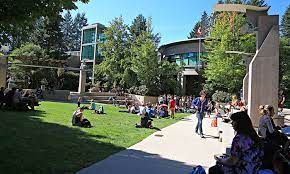
Capilano University
About Capilano University
-
CapU is a public, teaching-focused university in British Columbia (B.C.), Canada, headquartered in North Vancouver and serving the region’s Sea-to-Sky corridor and Sunshine Coast.
-
Founded in 1968 as Capilano College; it gained university status later.
-
It is named after Chief Joe Capilano (Sa7plek) of the S?wx?wú7mesh (Squamish) Nation.
-
According to its Fact Sheet (2023-24), CapU offers over 120 programs across its faculties.
-
Student numbers: for credit programs approximately 8,833 students; there are around 3,851 international students from 86 countries (according to one page)
-
Mission / spirit: It emphasizes small class sizes, hands-on learning, and fostering personal growth within an inclusive environment.
Why Choose Capilano University?
Here are reasons particularly relevant for international students:
-
Career-oriented, hands-on programs: CapU states its programs are designed to help you “get working quickly” with practical, applied education.
-
Smaller class sizes & more access: Their marketing emphasises smaller classes and more direct contact with instructors.
-
International student support: CapU has a dedicated centre (Wong & Trainor Centre for International Experience) supporting admissions, immigration, housing, etc.
-
Affordable relative to larger research universities: They claim international tuition is “30% lower than research-based universities in B.C.” (from the international student page)
-
Beautiful location: North Vancouver / BC Sea-to-Sky region offers a scenic, outdoor-rich environment plus proximity to Vancouver city life.
-
Expansion & new facility growth: The opening of a new campus in Squamish (Fall 2024) and future facilities shows growth and investment in infrastructure.
University Ranking & Reputation
-
CapU is characterised as a “teaching-focused university” rather than a large research institution. Some user commentary suggests it is good for smaller-scale programs and as a stepping stone or for application into more major universities.
-
While I didn’t locate a globally prominent “university ranking number” for CapU (e.g., QS or THE ranking for global research universities), what matters more for you as an international student is: accreditation, program relevance, class size, graduate employment, and student/industry support. CapU’s pages highlight strong outcomes: e.g., 83 % of its bachelor’s graduates working in jobs related to their program.
-
In short: CapU is well-regarded for applied learning in its region, but if you are looking for heavy-research university prestige, you may want to compare accordingly.
Campus Locations
CapU offers multiple campuses and learning locations:
-
Main Campus – North Vancouver, BC: The primary location (2055 Purcell Way, North Vancouver) with many programs.
-
kálax-ay Campus – Sunshine Coast (Sechelt), BC: Serving the Sunshine Coast region.
-
CapU Lonsdale – North Vancouver (Lower Lonsdale area): A newer site.
-
CapU Squamish – Sea-to-Sky corridor: Opened Fall 2024; an 18-acre campus with student housing.
-
Additionally, there are learning centres in the region (e.g., Ts’zil Learning Centre).
Types of Courses / Study Levels
CapU offers a wide range of study levels and credentials:
-
Bachelor’s degrees: Applied bachelor’s programs in business, early childhood care & education, environment & society, etc.
-
Diplomas & Advanced Diplomas: Two- or three-year applied programs.
-
Certificates: Shorter programs; e.g., new certificates being launched at Squamish campus (Communication for Professionals, Computing Systems, Outdoor Filmmaking, Sustainable Economics) for Fall 2025.
-
Associate degrees: At Squamish for instance Arts – Associate Degree is listed.
-
Continuing Studies / Upgrading: For adult learners, basic education, non-credit courses.
Mode of Learning (On-site / E-Learning / Blended)
-
CapU’s primary emphasis appears to be on-campus in North Vancouver, Squamish, etc., with small class sizes and in-person instruction highlighted.
-
The website does not prominently emphasise fully online or remote-only programs (at least in the pages I accessed). For international students, you’d want to check specific program pages for online or blended delivery and for whether you must physically attend in Canada (which for study permits would be relevant).
-
Visiting / exchange students section mentions a Visiting International Student Program (VISP) where you can study one or two terms; depending on programme you might have flexible entry.
-
If you are overseas and not relocating, you must check the latest delivery mode for your program of interest.
Number of Programs Offered
-
CapU states it offers over 120 programs across its faculties according to the fact sheet.
-
On the “Programs & Courses” page it says “nearly 100 programs” including degrees, diplomas, associate degrees, certificates.
-
So realistically: roughly 100-120+ distinct programs (various credentials) are available.
Highlights
-
Location in beautiful British Columbia: access to mountains, nature and Vancouver region.
-
Smaller class sizes, more personal support and applied learning focus.
-
Strong support services for international students: immigration advising, academic advising, peer mentorship.
-
New campus infrastructure: the Squamish campus opened in Fall 2024, expanding options and housing.
-
Program diversity: from design, film, business, health, education, etc.
-
Competitive scholarship opportunity for standout students (CAPX).
-
Affordable relative to some large research universities in the region (as claimed).
-
Multi-campus presence caters to urban + nature-orientated students.
Things for International Students to Consider / Checklist
-
Program eligibility & admissions: Check minimum academic requirements, English proficiency, program start dates and whether you need a study permit.
-
Delivery mode: Confirm whether the program you choose is fully on-campus (likely) or has online/blended options (if you’re not relocating).
-
Housing & cost of living: North Vancouver / Sea-to-Sky region has higher living costs compared to many places; housing boarding availability matters. (Squamish campus housing appears new and promising)
-
Tuition & fees: As international student, verify your tuition cost, additional fees, and budget for living expenses, travel, health insurance.
-
Scholarships & financial aid: Review eligibility of CAPX and other awards. If you apply early you may increase chances.
-
Career outcomes & transfer possibilities: If your goal is postgraduate study or a job, check whether your program is recognized, has co-op/internship elements, and check CapU’s graduate employment stats (e.g., 83% of bachelor grads in jobs related to program)
-
Support services: Use the Wong & Trainor Centre for International Experience, advisors, orientation, counselling services. These can make a big difference in adapting.
-
Campus life & student community: Smaller class sizes are a strength. However some students note that campus life/community may be less vibrant compared to large commuter universities. (Good to visit/ask current students)
Scholarship
Types of awards available to international students
-
International Student Entrance Awards — for newly admitted international students (academic + extracurricular merit; some consider financial need). These are intended to help incoming students with first-term tuition or to recognize achievements.
-
Term-based scholarships, bursaries & awards — available to continuing students each term. Many are awarded for academic excellence, leadership, athletics, or financial need. You typically apply using the online awards application when it opens each term.
-
Capilano Excellence Scholarship (CapX) — a flagship scholarship program (CapU highlights CapX among its major awards). Individual values vary; the university advertises large scholarship opportunities through donor-funded awards.
-
External awards — CapU maintains a curated list of external scholarships and bursaries (government, associations, philanthropic foundations) that international students may also pursue.
-
Special / targeted awards — some awards target specific programs, Indigenous students, leadership/community involvement, or students who have special circumstances (e.g., youth who aged out of care). Check CapU’s handsheets and award descriptions for details.
Who is eligible (general rules)
-
Many entrance awards require you to be a newly admitted full-time student at CapU (check the award for exceptions).
-
Continuing/term awards require active registration in the term and usually a minimum academic standard (criteria vary by award).
-
Some awards are open to international students specifically; others are open to all students (domestic and international). Always read eligibility on the award page.
-
Financial-need bursaries require documentation about your situation; scholarships are usually merit-based (grades, leadership, special skills).
How large are the awards?
-
Values vary a lot: from modest one-term bursaries to larger entrance awards and donor scholarships. CapU advertises awards such as the Capilano Excellence Scholarship (CapX) and states the university distributed $1.9M+ in 2023/24 — showing meaningful opportunities exist. Exact amounts depend on the specific award.
Practical tips to improve your chances
-
Apply early to entrance awards and pay any required deposits on time.
-
For competitive scholarships, show strong academic results + leadership/community involvement in your application. Use concise, concrete examples in essays or activity lists.
-
One application covers many awards — put effort into completing the online awards form thoroughly (it increases the number of awards you could be matched with).
-
Search external awards as well — CapU’s External Awards handout lists many third-party scholarships for international students.
Timeline & deadlines
-
Entrance awards: apply when you apply for admission; many entrance awards have application windows tied to intake deadlines (check the Future Students / Entrance Awards pages).
-
Term awards: the online portal opens per term — current students should apply each term when the application is live. Check the Current & Returning Students page for exact windows.
What happens if you win
-
Awards are usually credited to your student account (tuition) or paid out as cheques depending on the award terms. Notification is by email — follow instructions to accept or provide further documentation. Read each award’s terms (some are disbursed after official enrolment confirmation).
Programs
-
CAD 64,865
-
CAD 71,421
-
CAD 85,591
-
CAD 46,466
-
CAD 42,998
-
CAD 42,998
-
CAD 42,998
-
CAD 45,626
-
CAD 45,626
-
CAD 88,985
-
CAD 118,732
-
CAD 91,324
-
CAD 132,424
-
CAD 62,730
-
CAD 89,228
-
CAD 91,272
-
CAD 13,444
-
CAD 42,998
-
CAD 23,470
-
CAD 42,998
-
CAD 57,566
-
CAD 44,335
-
CAD 30,351
-
CAD 30,039
-
CAD 47,597
-
CAD 54,740
-
CAD 48,456
-
CAD 82,973
-
CAD 52,645
-
CAD 52,627
-
CAD 44,968
-
CAD 51,727