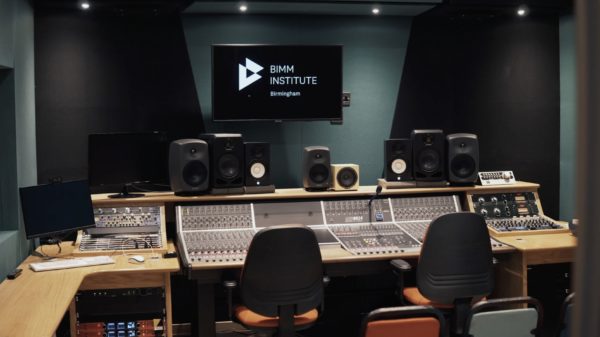
BIMM Institute
About BIMM University
-
BIMM University offers higher education dedicated to the creative industries — especially music, film/TV, performing arts, games/animation and creative technology.
-
It has grown over ~40 years (its predecessor institutions) and formally attained university status in the UK in July 2022.
-
According to their site: “we provide an extensive range of courses … to over 9,000 students across 9 campuses in the UK, Ireland and Germany.”
-
The institution emphasises practical, industry-connected programmes, and a creative community ethos: “As a BIMM student you’ll be part of a unique creative community with access to unrivalled connections and real-world industry experiences.”
-
Their stated purpose, vision and values emphasise diversity, challenging norms, collaborative growth and integrity
Why choose BIMM University?
-
If your ambition is to work in music, film, media, performance, or creative tech/animation rather than a purely academic subject, BIMM is designed around that: the curriculum, facilities and industry connections are tailored for the creative industries. (E.g., “We design our education to truly … meet the needs of today’s and tomorrow’s creative industries.”)
-
Multiple vibrant urban campuses (UK, Ireland, Germany) in creative cities — this gives you access to live music scenes, studios, festivals, media hubs. For example, the Berlin campus emphasises being in a “global creative hub.”
-
Strong focus on practical work, real-world experience, networking, masterclasses with industry professionals. (For example, they mention “masterclasses from industry experts and trailblazers” in some promotional material.)
-
Being part of a newer university with a niche in creative industries could offer more tailored support for your field rather than a very broad traditional university.
University ranking / reputation
-
Because BIMM is relatively new as a full university, broad “league table” rankings are modest. For example, in the subject of Drama, Dance & Cinematics at The Complete University Guide, BIMM is ranked 90th out of 94.
-
What this means:
-
Don’t expect a top-10 overall ranking in UK-wide league tables (at present)
-
What matters more if you choose BIMM: the quality of your specific school/department (music, film, etc), how well it connects to the industry you target, alumni success, facilities and your own effort.
-
-
For an international student, the value will depend on how well the programme aligns with your career goals and how you use the opportunities (networking, placements, live performance, portfolio).
Campus Locations
-
BIMM has campuses in multiple cities across the UK, Ireland and Germany.
-
Some of the key locations:
-
UK: London, Brighton, Bristol, Birmingham, Manchester & possibly others.
-
Ireland: Dublin campus.
-
Germany: Berlin campus.
-
-
With the London, Brighton, Manchester, etc, you’ll be in major cultural/creative cities — helpful for your creative industry access.
-
Note: Always check your exact campus for your chosen course (since some courses may only be offered at certain campuses).
-
For international students: location affects cost of living, travel, visa arrangements etc (e.g., London is more expensive than some regional UK cities).
Types of courses / Study levels
-
BIMM offers a variety of levels:
-
Undergraduate (Bachelor’s) degrees (BA, BMus, etc) in music, songwriting, production, performing arts, filmmaking, creative tech.
-
Postgraduate (Master’s) degrees: English?taught Master’s programmes (especially in Germany campus) are available.
-
Short courses / diplomas / foundation programmes: Some areas offer 1-year diplomas or foundation paths (especially creative technology, performance, production) to build into a full degree.
-
-
So you're covered from foundation/diploma through to full degrees and postgraduate options in creative fields.
Mode of learning (onsite / e-learning / blended)
-
The predominant mode is on-campus face-to-face learning with hands-on studio work, live performance, teamwork, workshops.
-
Since the creative industries rely heavily on in-person collaboration, rehearsal, live events, studios, etc, you’ll find the majority of courses expect you to be on site.
-
Some modules or short courses may offer blended/hybrid elements (especially for global students or in Germany) but you should check the specific course page for that info (BIMM emphasises “English-taught Bachelor’s and Master’s degree programmes in Berlin” for example).
-
For an international student this means you’ll likely be relocating to the country of the campus and attending in person — ensure you book accommodation, arrange visa/immigration etc.
Number of programmes offered
-
While I could not find an exact single number of every programme, the promotional materials say: “an extensive range of courses … to over 9,000 students across 9 campuses” and “across 14 schools” in some places.
-
The many specialisations in music (performance, songwriting, production, business), film, acting, games/animation suggest dozens if not hundreds of individual course variants.
-
As an applicant you should check the course-finder on the website to count how many options there are for your field/region.
Highlights
-
BIMM is very much industry-driven: The focus is on creative industries, with strong emphasis on employability, real-world projects, masterclasses, and creative community.
-
Vibrant campuses in urban creative hubs (London, Berlin, Manchester, Dublin…) provide connection to live music scenes, media industries and cultural life.
-
The “university status” is recent (2022) which means more autonomy in awarding degrees and designing courses to reflect the industry.
-
Diversity of creative subject areas: Not just music, but film & TV (via MetFilm School), games/animation/VFX (via MetStudios), performing arts, etc.
-
Strong scholarship offerings (especially to support under-represented groups) and declared ambition to remove financial barriers.
-
For an international student: chances to collaborate across different creative disciplines, network globally, gain live portfolio work, perform & showcase.
Scholarship
Future Talent Scholarship
-
BIMM University launched a “Future Talent Scholarship” for September 2024 entry across their schools (music, film, performing arts, creative technology) which covers full three-year tuition fees for a candidate from an under-represented/low-income background.
-
Eligibility: varies by campus/location; you need to apply for an undergraduate degree for that intake; from an under-represented group or low-income household.
-
How to apply: apply for your degree programme, then you’ll receive a scholarship application form. Deadline for one example was 6 June 2024.
-
Important note for international students: The publicly-announced versions of this scholarship seem to emphasise UK/EU students (or domestic fee status) and “under-represented groups” in UK/EU higher education. It is not 100% clear how many of these are open to non-EU/EEA international fee-paying students. You’ll need to check the campus you’re applying to.
Named campus-specific scholarships
-
Joan Armatrading Scholarship (Birmingham campus): Full three-year tuition fees for one eligible candidate on music courses starting Sept 2024. Eligibility criteria: UK national, home fee status, low household income and/or under-represented group.
-
Moses Schneider Scholarship (Berlin campus): Full three-year tuition fees for one eligible candidate on music courses starting Sept 2024. Eligibility: German/EU national currently residing in Germany or EU, or permanent resident/refugee status in Germany; plus low income/under-represented group.
-
Games Ground Future Talent Scholarship (Berlin, for video games degree): Full tuition fees for candidate beginning eligible course Sept 2024; eligibility: German/EU national residing in Germany/EU or permanent resident/refugee status; low household income/under-represented group.
These indicate that many of the named scholarships are aimed at EU/UK fee?statuses or resident students, rather than general international fee-paying students from outside EU/UK.
Early Confirmation Discount for International Students
-
According to the “Fees and finance for international students” page: For overseas applicants (outside EU/EEA) the tuition fee is stated (e.g. £15,950/yr for certain courses) and there is an Early Confirmation Discount of £2,000 per year for international students from outside EU/EEA who accept their offer and pay the deposit by the deadline.
-
This discount:
-
Applies to “overseas applicants ineligible for home (domestic) fees”.
-
Requires you to accept your offer and pay deposit by 15th June 2026 for one example page.
-
Cannot be used in conjunction with any other discount/offer/scholarship.
-
This is a clear benefit for international students (non-EU/EEA) and amounts to a straightforward reduction in tuition cost.
Fair Access Fund / Bursaries / Hardship Support
-
The “Scholarships and bursaries” page (UK) states a “Fair Access Fund (FAF)” for undergraduate students from under-represented groups. It provides bursaries or access awards (not loans) paid across years or first year.
-
Eligibility: for example the FAF baseline criteria: must have applied and accepted an offer to study a BIMM University undergraduate degree at specified UK campuses, must be UK resident paying home fee rate. There are additional categories (low income household, care leavers etc).
-
Also, there’s the “Fair Access Fund” for courses starting 2024, supporting students from underrepresented/financially disadvantaged backgrounds: up to £1,500 per academic year for living expenses, course materials etc.
What this means if you’re an international student (from India, Asia, outside UK/EU)
-
You are eligible for the Early Confirmation Discount (for truly “overseas” applicants) of £2,000/yr (UK) as long as you accept your offer and pay deposit by the deadline. That is one solid funding option for non-EU international students.
-
However: Many of the full-tuition scholarships or named scholarships seem aimed at UK or EU/fee-status or residents. So if you are an Indian student or non-EU/EEA resident applying for the UK campus, you’ll need to check very carefully whether you qualify.
-
The “Scholarships & bursaries” and “Fair Access Fund” seem to primarily target UK-resident / home-fee students; so the financial support available specifically to non-EU international fee-paying students may be more limited.
-
Thus: you should assume you won’t always get full tuition coverage if you are outside the UK/EU, unless explicitly stated for “international students”. But you can benefit from certain defined discounts and apply for bursaries if conditions allow.
Eligibility to check
-
Are you eligible under the terms: “overseas applicant ineligible for home fees”? (If yes, you likely qualify for the £2,000 discount)
-
Are you applying for the correct campus and intake (UK/UK campus vs EU campus)? Different campuses may have different eligibility.
-
For full scholarships (if offered) check: Are international fee-paying students allowed, or only UK/EU students? E.g., the Moses Schneider and Games Ground scholarships specified “German/EU national currently residing in Germany/EU”.
-
Check deadlines for scholarship applications. For example, one scholarship deadline was 6 June 2024.
-
For bursaries/hardship funds: check whether they are open to international students or only to UK residents.
Application process
-
Step 1: Apply for your degree programme at BIMM in the campus/location of your choice.
-
Step 2: Once you receive an offer (or conditional offer) you’ll often be sent a scholarship application form (if applicable). E.g., for Future Talent Scholarship they said: “once you have applied you will receive the necessary scholarship application form.”
-
Step 3: Pay any required deposit by the deadline (for the discount) to qualify. For example, deposit of £4,000 for self-funded international students to secure place.
-
Step 4: Provide required supporting documents: proof of talent (for creative/arts scholarships, maybe audition/portfolio), proof of financial background (if under-represented/low income), any residency/fee-status proofs.
-
Step 5: If you win, the scholarship or discount will be applied to your tuition fees (deducted when you enrol). The discount will usually be “automatically deducted” if you meet criteria (for the Early Confirmation Discount).
-
Step 6: Note the “cannot be used in conjunction with any other discount, offer or scholarship” clause for the Early Confirmation Discount. So you cannot stack it with other discounts.
-
Step 7: For bursaries/hardship funds: you may need to register interest or apply separately once enrolled. E.g., Fair Access Fund registration begins after 1 June 2024.
Documents you should prepare
-
Your academic transcripts/certificates.
-
Your portfolio/audition details if you’re applying for a creative degree (music, film, games).
-
Proof of English language ability (if required) and any other entry requirements for your programme.
-
Proof of fee status and nationality/residence (for eligibility for international discount vs home fee).
-
For low-income/under-represented scholarships: proof of household income, or documentation of under-represented status (care leaver, disability, etc).
-
Deposit payment receipt and confirmation of acceptance of offer (for discount eligibility).
-
Scholarship application form (once you receive it) and any personal statement explaining your creative potential, commitment to your discipline, etc.
Important things to watch out
-
Deadline: Missing the deposit by the deadline may mean you miss the discount. For example, “pay deposit by 15 June 2026” in one page.
-
Fee status & location matters: Many awards are location-specific (UK campus vs Berlin vs Dublin) and also fee-status specific (home vs international vs EU). So read the small print.
-
Stacking of discounts: Some discounts cannot be combined with other offers. Make sure you know if you’re giving up one benefit when taking another.
-
Living costs not always covered: Some scholarships cover full tuition; many only reduce tuition fees or provide bursary for living/materials. You still need to budget for accommodation, living costs, visa, travel.
-
International visa & sponsorship: If you’re outside UK/EU, check whether that campus can sponsor international students (for example in Ireland or Germany, check Student Route Visa eligibility). The agent guide mentions “BIMM Institute Dublin is only able to sponsor students requiring a Student Route Visa (SRV) for the BA (Hons) Commercial Modern Music course”.
-
Course suitability & audition: Especially for creative degrees you often need audition or portfolio review. For example, the international brochure states “There are a number of international talent scholarships available to students who demonstrate outstanding talent at audition or interview.”