Finlandia University
About Finlandia University
-
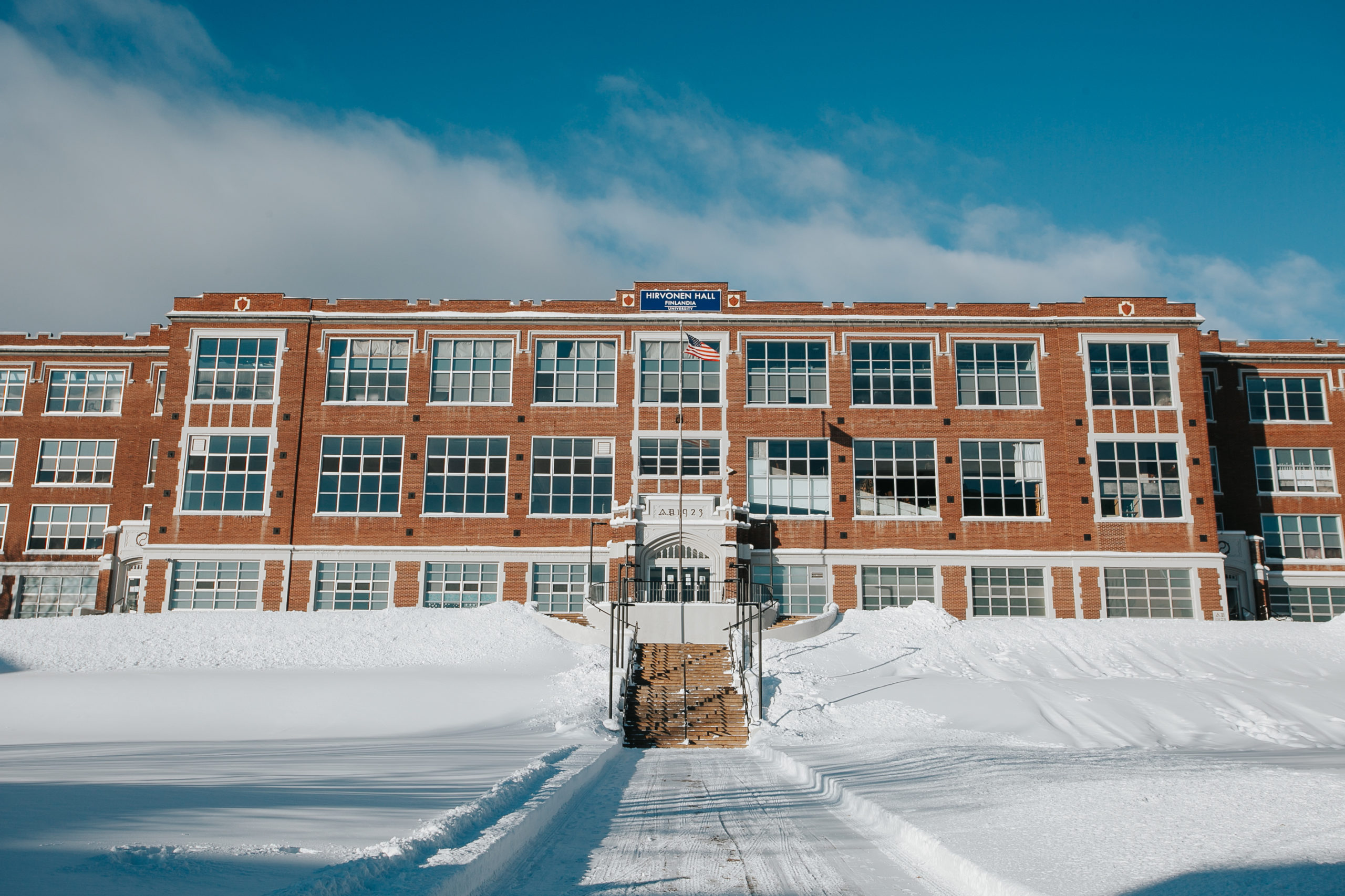
Finlandia University was a private liberal-arts university located in Hancock, Michigan (Upper Peninsula), at 601 Quincy St., Hancock, MI 49930.
-
It was founded in 1896 (originally as Suomi College and Theological Seminary) by Finnish Lutheran immigrants, and later renamed Finlandia University in 2000.
-
It had a small student population (several hundred undergraduates) and a student-faculty ratio that allowed for more individualized attention.
-
The university had a strong Finnish heritage and connections (in a region with Finnish-American culture).
Why Finlandia University (What appealed to students)
-
The small size of the campus meant more direct access to faculty and potentially closer student-instructor interactions — helpful for students looking for a supportive environment.
-
Location: The Hancock/Houghton area (on Michigan’s Upper Peninsula, on the Keweenaw Peninsula) offered a different U.S. college town experience — more rural and nature-rich, which can appeal to students looking for a peaceful, community-focused setting.
-
The Finnish heritage may have given it a unique cultural identity, which some international students might find especially interesting.
-
For international students, smaller institutions can make visa/immigration support and cultural integration more manageable than large mega-universities.
University ranking & reputation
-
There isn’t a strong, high-profile national ranking for Finlandia University relative to major U.S. research universities. Some sources list its national rank as ~1,686 in one dataset.
-
According to CollegeVine: student-faculty ratio ~9:1, graduation rates rather low (for example 6-year graduation rate ~31%).
-
Given the institution’s size, rural location, and focus on liberal arts, the ranking profile is modest; applicants should weigh the environment and support services rather than purely ranking alone.
Campus Location(s)
-
The primary and only campus was in Hancock, Michigan, USA.
-
Hancock is in the Upper Peninsula, known for its forests, lake-Superior coastline, robust snow (winter) conditions, and a smaller community feel.
-
Because of the rural or semi-rural setting, students should expect a different pace of life compared to large urban universities (e.g., fewer large-city amenities but possibly closer-knit community).
Types of courses / Study Levels
-
The university offered undergraduate (bachelor’s) degrees primarily (e.g., liberal arts, business, education, nursing) and possibly some associate-level or certificate programs.
-
From available sources: East business-related majors, general liberal arts, nursing, physical therapy assistant, etc.
-
It appears less emphasis was placed on very large graduate-school offerings (master’s, doctoral) in the publicly available data.
-
For international students: you would check if your desired major is offered, its delivery mode, and accreditation/licensing (especially for professional programs like nursing).
Mode of Learning (On-site / E-learning / Blended)
-
The primary mode at Finlandia was in-person (on-campus) given the campus-based liberal arts model.
-
Online or hybrid offerings appear to have been very limited: one business-degree site noted that only 8 students took at least one online class thus far.
-
Therefore, if you are an international student seeking flexible online or blended formats, this institution may not have been the strongest fit.
-
If you require full online study (especially from abroad), you would need to check with the admissions office what online/blended programs (if any) are available.
Number of Programs Offered
-
Specific numbers are not abundantly clear in public summaries, but one site lists “20 undergraduate business degree options” alone.
-
Another source: the institution used to have a broad liberal arts curriculum.
-
Given small student body size (under ~400 full-time undergraduates) the program count was modest compared to large universities.
-
If you are interested in a particular major, you would need to check the catalog to see availability.
Highlights & Key Strengths
-
Unique heritage: Finlandia University offered a distinctive Finnish-American cultural dimension in its region, which could be attractive for students interested in that background.
-
Small class sizes and closer student-faculty interaction.
-
A quieter environment (Upper Peninsula) which may appeal to students who prefer less urban, more nature-oriented surroundings.
-
For some programs (e.g., business, liberal arts) potential for individualized advising and support.
What This Means for You (International Applicant Perspective)
-
Because Finlandia University has closed, you cannot begin a new degree there. That means you’ll need to choose an alternative institution.
-
If you were hoping for a small-campus U.S. experience in a nature-rich setting, you’ll need to find another university with similar features.
-
If you already have credits from Finlandia, you should check with your home institution or another U.S. college about credit transfer (the agreements mentioned above help this).
-
Be particularly careful with scholarship/financial-aid commitments (since operations are winding down) — verify everything with the receiving institution.
-
For future planning: always check that a university is actively enrolling, accredited, financially stable, and open to international students.
Scholarship
The university offered several merit-based and special scholarships that international students could also qualify for, provided they met academic and enrollment requirements. Here’s an overview of what those scholarships used to include:
-
Board of Trustees Scholarship — This was one of the most prestigious merit-based scholarships offered at Finlandia. It awarded around $7,500 per year to high-achieving students who had an outstanding academic record, generally a high school GPA of 3.5 or higher. The award was renewable each year if the student maintained a strong GPA at Finlandia (around 3.25 or above).
-
President’s Scholarship — This award recognized strong academic performance and leadership potential. It provided about $5,500 per year to students with a GPA of 3.25 or higher, renewable if the student maintained good academic standing (a GPA of around 3.0 each year).
-
Dean’s Scholarship — This was designed for academically solid students who might not be top-tier but still maintained good grades. It offered around $3,500 per year for students with a GPA of at least 3.0. Renewal required maintaining a GPA of approximately 2.75.
-
Northern Neighbors Scholarship — This scholarship was a unique award targeted specifically at Canadian students. It provided $2,000 per year and could be combined with other scholarships. It was open to students who lived on campus and were admitted to full-time study.
-
Service Scholarship — This award recognized students who had shown community service involvement. It offered about $2,000 per year (paid $1,000 per semester for up to four years). To qualify, students needed at least a 2.25 GPA in high school and a record of volunteering. Recipients had to continue community service (around eight hours per semester) while maintaining full-time status at Finlandia.
-
Transfer Student Scholarships — Transfer students coming to Finlandia from other colleges could apply for the Finnish Strong Transfer Scholarship, which was valued at approximately $10,000. This was based on their academic performance at the previous institution.
Scholarship Eligibility Requirements (Before Closure)
Most of Finlandia’s scholarships were merit-based, focusing on academic achievement and community involvement. International students were eligible for nearly all of them, provided they met the same academic standards as domestic students.
To be considered for these scholarships:
-
Students had to be admitted as full-time undergraduates.
-
They needed to maintain minimum GPA requirements that varied depending on the scholarship.
-
Some scholarships required students to live on campus or participate in volunteer activities.
-
All scholarships were renewable each year as long as the student maintained satisfactory academic progress.
There was no separate scholarship application for most merit-based awards — international students were automatically considered for scholarships at the time of admission.
Key Points About International Student Aid
-
Finlandia University had a reputation for affordability among private U.S. universities.
-
Almost all international students received some form of scholarship or institutional aid.
-
These scholarships typically covered tuition costs only — not housing, books, or living expenses.
-
Finlandia encouraged students to apply for external scholarships from their home countries or international organizations to supplement their funding.
-
The average financial aid package (before the university closed) was estimated to be around $9,000–$10,000 per year, depending on eligibility and GPA.
Current Status and Implications
As of now, Finlandia University is permanently closed and is not accepting any new students — domestic or international. This means that:
-
No new applications for admission or scholarships can be submitted.
-
The scholarships mentioned above are no longer available to future students.
-
Students who were previously enrolled had their academic records and credits transferred to partner institutions such as Michigan Technological University, Adrian College, and Wartburg College.
If you are an international student looking for similar types of scholarships, you should explore other U.S. universities that offer strong merit-based awards for international students, especially smaller liberal arts colleges in the Midwest, which often provide generous tuition discounts similar to Finlandia’s past policy.
Recommendation for International Students
Although Finlandia University is closed, you can use its model to look for other universities that:
-
Automatically consider international students for merit scholarships upon admission.
-
Offer renewable awards based on academic performance.
-
Have special international or neighbor-country scholarships (like for Canada or other regions).
-
Provide service-based or leadership-based scholarships open to all students.